






2026 Annual SMA Research & Clinical Care Meeting: Session Summaries
At the end of June, SMA researchers and clinicians from around the world — spanning academia, government, and biotech and pharmaceutical companies — gathered in Orlando, Florida, for the 30th Annual SMA Research & Clinical Care Meeting.
The meeting’s goals were to share early, unpublished data, accelerate the pace of research and discovery, and build stronger collaboration — between researchers and industry, and between new and experienced clinicians — in pursuit of excellence in SMA care.
This year, we’re bringing all our session summaries together in one place so you can easily find topics that matter most to you, browsing by day, subject, or by session title. Where relevant, summaries also link out to more information on specific disease-modifying therapies and drug trials, making it easier to dig deeper on the topics you care about. Each of these sessions traced a shared theme — how SMA is increasingly understood and treated as a whole-person, whole-lifespan condition.
We hope these summaries help you explore the research and care advances shared at this year’s meeting, and dive into the sessions that interest you most!
Be sure to keep checking our Latest News posts for other news from Cure SMA!
What is the difference between the Clinical Care and Research sessions?
Clinical Care sessions focus on how SMA is diagnosed, monitored, and managed day to day — the practical care that helps people with SMA live as well as possible. These sessions are led largely by clinicians: the doctors, therapists, and specialists who care for people with SMA.
Research sessions focus on the science behind SMA — understanding the biology of the disease, developing and testing new treatments, and measuring how well they work. These sessions center on the work of scientists and researchers — many of whom are also clinicians — driving the field forward.
At this meeting, some sessions combined both, bringing clinicians and researchers together to connect new science with everyday care.
Wednesday, Day 1 — Clinical Care and Combined Research & Clinical Care Sessions: Navigating the New Era in SMA Care
The first morning of the Research and Clinical Care Meeting featured four Clinical Care sessions that together showed how SMA care has evolved. As disease-modifying therapies transform treatment, the focus has shifted from slowing the progression of SMA to supporting people throughout their lives. Reflecting this broader view of SMA as a whole-person, lifelong condition, the sessions moved from clinical updates across neurocognition, technology, and orthopedics, to SMA’s multi-system effects on the body, neurofilament as a marker of nerve health, and mental health support for individuals and families.
In the afternoon, combined Clinical Care and Research sessions broadened the focus from the individual to the wider SMA community. Topics included the current state of diagnosis and treatment, emerging prenatal and newborn therapies, and how clinicians and families navigate a growing range of treatment options, emphasizing both individual care and the field’s future direction.
Clinical Care Sessions
Presentation 1. Brief Updates in SMA
Moderator: Julie Parsons, MD — University of Colorado School of Medicine, Colorado, USA
Panel Members: Sarah Wright, DO — Children’s National Hospital, Washington, D.C., USA
Luca Labianca, MD, PhD — La Sapienza-Sant’Andrea University Hospital, Rome, Italy
Tina Duong, MPT, PhD — Stanford University, California, USA
Building on updates from previous meetings, three specialists shared where things stand now across neurocognition, technology, and orthopedics — offering a snapshot of how quickly clinical care is evolving.
- Neurocognition (Dr. Wright): As more infants are treated near birth and children grow up on treatment, a fuller picture of SMA is emerging. Thinking and language are areas that have often gone under-recognized because attention has historically centered on motor function. In this new therapy era, researchers and clinicians have begun noting that expressive language and social communication may develop differently in severe forms of SMA compared to age-matched peers, and that some of those differences may improve with early intervention. That raises practical questions for the treatment era: which children need closer developmental follow-up, and how early can support begin?
- Why these differences may occur: Wright framed several overlapping explanations — the biology of survival motor neuron (SMN) protein loss in the brain, social factors, developmental experiences, and nuances of how neurodevelopment is tested. Brain imaging work has found structural differences more often in SMA than in peers, and the cerebellum (a movement and learning related region) appears to be among the most vulnerable areas of the brain. She closed with a practical, neurodevelopmental stage-by-stage checklist for clinicians — including actions to consider at diagnosis/newborn screening, infancy/toddlerhood, preschool/school age, and older school age/adults stages.
- Orthopedics (Dr. Labianca): Care continues to evolve as the treatment era reshapes orthopedic management, with changing approaches to monitoring, physiotherapy, bracing, and assistive devices through to surgery — with the right choice depending on a person’s age, function, and how their condition is progressing. The throughline was that orthopedic care is increasingly proactive and individualized with goals that include protecting growth, breathing, and comfort over a lifetime, and not simply reacting as problems appear.
- A changing picture: Recent data indicate that receiving disease-modifying therapy earlier combined with having a higher SMN2 copy number were associated with lower rates of early-onset scoliosis. That is reshaping long-standing questions in spine care: who benefits from bracing, how best to protect the growing chest and lungs in the youngest children, and how today’s earlier-treated children will do over time.
- Technology (Dr. Duong): Duong echoed the morning’s shift from a palliative model toward rehabilitation — supporting people living with SMA over a lifetime — and made the case that digital technology (wearable sensors, smartphones, connected devices) is becoming a genuine partner in that support, rather than a gadget on the side. The throughline was a move from episodic snapshots toward a continuous, real-world picture: tools that can pick up subtle changes in movement between clinic visits, sometimes flagging a change before a loss of function becomes obvious. The point wasn’t technology for its own sake, but technology working alongside clinicians — the device surfaces the signal, and the clinician interprets it in the context of the person’s goals, stage of SMA, and daily life.
- Why it matters: Because these tools capture data continuously and objectively, they can be more sensitive to change than periodic in-clinic testing, which may sharpen how future clinical trials measure whether a treatment is working. She illustrated this with a re-analysis of Parkinson’s disease trial data, presented as a model for SMA trials, suggesting a digital-biomarker endpoint (a measurable signal used to track health or disease) was more sensitive to change than traditional rating scales — potentially detecting a treatment effect with fewer participants. She saw promise in everyday life too: SMA-specific exercise apps, rethought wheelchairs and upper-limb support, and functional electrical stimulation to re-engage underused nerve-muscle connections — all aimed at extending what clinicians can do between visits.
disease-modifying therapy: A treatment that targets the underlying cause of a disease. The four FDA-approved disease-modifying therapies for SMA are onasemnogene abeparvovec-brve (Itvisma), nusinersen (Spinraza), onasemnogene abeparvovec-xioi (Zolgensma), and risdiplam (Evrysdi). Each of these treatments works by increasing levels of SMN protein.
SMN2 copy number: The number of copies of the SMN2 gene a person has. In SMA, having more SMN2 copies generally helps the body make more SMN protein and is often linked with less severe disease.
survival motor neuron (SMN) protein: A protein made from the instructions encoded in the SMN1 gene and the low-functioning SMN2 gene. Motor neuron health and function depend on SMN protein.
Presentation 2. Multi-System Gastrointestinal and Metabolic Complications in Spinal Muscular Atrophy Across the Lifespan
Moderator: Julie Parsons, MD — University of Colorado School of Medicine, Colorado, USA
Panel Members: Ihuoma Eneli, MD — Children’s Hospital Colorado Anschutz Medical Campus, Colorado, USA
Anna Magdalena Banc-Husu, MD — Baylor College of Medicine, Texas Children’s Hospital, Texas, USA
SMA is increasingly understood as a whole-body condition: because survival motor neuron (SMN) protein is made in every tissue, not just nerve cells, its effects can reach the liver, metabolism, and weight regulation. This session looked at two of those systems — how the liver is affected and how it factors into treatment, and how weight and metabolism shift across the lifespan.
- Liver (Dr. Banc-Husu): The liver’s roles — detoxification, protein synthesis, and others — can be affected by SMA. SMN protein is expressed in all tissues, including the liver. As a result, people with SMA can be more prone to changes like elevated blood lipids (dyslipidemia) and fat build-up in the liver (fatty liver). In SMA mouse models, more than 5,000 genes were affected in the liver, making them a useful window into how loss of SMN affects the body, beyond nerve and muscle.
- Why this matters: The liver’s role in SMA also connects to treatment. Because AAV gene therapy is processed by the liver, temporary changes in liver labs can occur in the weeks after infusion — which is why liver monitoring is already a routine part of gene-therapy care. Dr. Banc-Husu’s practical guidance reinforces that approach: a baseline liver evaluation before treatment, follow the labs closely afterward, and promptly evaluate changes if indicated.
- Metabolism & weight (Dr. Eneli): Eneli set out to review the weight-related and metabolic challenges people living with SMA face across the lifespan, and to discuss emerging considerations around GLP-1-based therapies. Body weight is biologically defended around a “set point,” shaped by many appetite-regulating pathways that involve both genes and the environment. In SMA, several forces push on that balance at once: reduced movement lowers the body’s energy use, swallowing difficulties or tube feeding change how people eat, medications and growth patterns play a role, and body composition shifts — so many individuals carry excess body fat alongside muscle loss, which makes standard BMI (body mass index, a measure of body fat based only on height and weight) a poor measure of health in SMA.
- The GLP-1 question: Because muscle itself is a major regulator of whole-body metabolism, weight management in SMA is complicated — the goal is to address excess fat without sacrificing already-limited muscle. In the general population, most of the weight lost from GLP-1 therapies comes from fat, while a meaningful share of the loss is lean mass — and trials have also shown small reductions in bone density. Given this, Dr. Eneli discussed these as open, emerging considerations for SMA care rather than settled guidance: potentially useful tools, but ones that need careful consideration in a condition where preserving muscle and bone is especially important.
AAV gene therapy: A one-time treatment that delivers a working copy of the SMN1 gene into cells using a modified, harmless virus. Onasemnogene abeparvovec (Zolgensma) is the AAV gene therapy approved for SMA; because the virus is processed by the liver, liver function is monitored closely after treatment.
GLP-1-based therapies: Medications, such as semaglutide (Ozempic, Wegovy), that reduce appetite by mimicking a natural gut hormone. Originally developed for diabetes, they are increasingly used for weight management.
SMA mouse model: Mice that have been genetically altered to produce less SMN protein and possess SMA-like symptoms for research purposes. Also referred to as “SMA mice.”
survival motor neuron (SMN) protein: A protein made from the instructions encoded in the SMN1 gene and the low-functioning SMN2 gene. Motor neuron health and function depend on SMN protein.
Presentation 3. Neurofilament in Spinal Muscular Atrophy Across the Lifespan
Moderator: Pooja Mohan Rao, MD — Georgetown University Hospital, Washington, D.C., USA
Panel Members: Stephen Kolb, MD, PhD — Ohio State University Wexner Medical Center, Ohio, USA
Crystal Proud, MD — Children’s Hospital of the King’s Daughters, Virginia, USA
Neurofilament is the main structural protein inside the long axons of nerve cells. When axons are injured, neurofilament is released into the fluid around them, so measuring it — in blood or spinal fluid — offers a window into nerve cell injury.
- Biology and use (Dr. Kolb): In SMA, neurofilament works as a useful biomarker for tracking disease activity and response to treatment. Persistent elevation can signal ongoing nerve-cell stress that might benefit from a change in care, and elevation can appear before symptoms are visible. A faster, earlier, and sustained drop in neurofilament after treatment appears to be the most favorable pattern, and Dr. Kolb recommended tailoring how often it is checked to each therapy.
- Trial evidence (Dr. Proud): Across major studies, neurofilament fell in treated patients: in ENDEAR (nusinersen), in NURTURE (where an early plasma level was a predictor of later walking), in RESPOND and in DEVOTE (where reductions outpaced the sham comparison). One important nuance emerged with gene therapy: in a set of presymptomatic infants, neurofilament often rose in the weeks after infusion before coming back down, which researchers have proposed may reflect a temporary stress on vulnerable neurons during a critical early window rather than lasting harm. The session closed with a call for the field to evaluate neurofilament levels more consistently in practice, share treatment-response data across trials, and continue working toward understanding how it correlates with real-world function.
Presentation 4. Supporting the Mental Health of SMA-affected Individuals and Families: Individual, Community, and Systems Based Approaches
Moderator: Pooja Mohan Rao, MD — Georgetown University Hospital, Washington, D.C., USA
Panel Members: Colette Gramszlo, PhD — Children’s Hospital of Philadelphia, Pennsylvania, USA
Al Freedman, PhD — Rare Counseling & Freedman Counseling Associates, Pennsylvania, USA
This session made the case for treating mental health as a core part of SMA care — for patients and their families — and offered practical ways to build it into everyday practice.
- Screening and connection (Dr. Gramszlo): Validated tools (such as the GAD-7, PHQ-8/9, and PROMIS measures) can help clinicians recognize anxiety, depression, and distress. Dr. Gramszlo offered a simple practice for everyday visits — normalize, ask, pause, connect — emphasizing that genuine connection with a patient in the moment is a meaningful action. Her key takeaways: treat mental healthcare as a core component of overall wellbeing, ask about mental health repeatedly (not just once), advocate for these services within your hospital and division, and remember that a preventive approach can reduce the severity and impact of difficulties later on.
- Family experience (Dr. Freedman): Drawing on three decades working with families facing rare diagnoses and disability — and on his own experience as the parent of a son with SMA — Dr. Freedman described how a diagnosis affects the whole family, and how the treatment era has added a new kind of stress: deciding among options. He noted that many adults living with SMA struggle to access mental health care, and that peer connection within the community is powerful. His closing point was that medical progress hasn’t erased the psychosocial weight of SMA: mental-health needs span the whole community — across treatment status, age, and role — and clinicians, families, and industry partners all have a part to play. He added a practical note for clinicians: when meeting a new patient, start by asking what they do for fun.
Combined Research and Clinical Care Meeting
Presentation 5. 2025 State of SMA
Presenter: Lisa Belter, MPH — Cure SMA — Illinois, USA
- 2025 State of SMA: Drawing on Cure SMA’s databases (roughly 12,000 individuals since 1996), this annual update tracked how the community is changing — demographics, diagnosis, and treatment pathways — and the unmet needs members have identified as priorities. Two themes stood out: the majority of people living with SMA today are adults, and significant unmet needs persist across the community. Cure SMA is connected to approximately 74% of the estimated 9,000-9,500 individuals currently living with SMA in the U.S., giving these findings a broad view of the U.S. community. You can find the 2025 State of SMA Report here.
- Early treatment and access (from Cure SMA survey data): A study drawn from the Cure SMA Community Update Survey found that age at first treatment was the strongest predictor of reaching motor milestones — even among children with fewer SMN2 copies. The earlier the treatment, the greater the motor function. At the same time, the treatment landscape is growing more complex, and access gaps persist: about half of people with SMA experienced an initial insurance denial and resulting delays in getting treatment. Together, the data reinforce the case for prompt diagnosis and treatment — while showing how much work remains to ensure access for everyone.
SMN2 copy number: The number of copies of the SMN2 gene a person has. In SMA, having more SMN2 copies generally helps the body make more SMN protein and is often linked with less severe disease.
Presentation 6. Neurodevelopment Panel
Moderator: Tom Crawford, MD — Johns Hopkins Hospital, Maryland, USA (also presented)
Panel Members: Richard Finkel, MD — St. Jude Children’s Research Hospital, Tennessee, USA
Charlotte Sumner, MD — Johns Hopkins University School of Medicine, Maryland, USA
This panel explored where neurodevelopment and neurodegeneration intersect in SMA, the emerging idea of treating before birth, and how families and clinicians might weigh early decisions.
- In-utero biology (Dr. Sumner): Carrier screening and prenatal testing are identifying more babies with SMA before birth. Among infants with two SMN2 copies, approximately half already show signs of SMA at birth. Important nerve development also happens in the womb. Together, these facts are part of the rationale for asking whether treatment could begin earlier, during a window when the blood-brain barrier is still open, and the developing immune system is more tolerant.
- Prenatal therapy (Dr. Finkel): Dr. Finkel walked through the rationale and early evidence for treating SMA before birth. In animal studies (mice and sheep), giving SMN-targeted therapies before birth appears to improve outcomes. In humans, risdiplam (Evrysdi), an approved SMA treatment, has been given during pregnancy so it reaches the baby before birth — a use not yet part of its formal approval. Dr. Finkel shared an early look at 12 prenatal-therapy cases: babies with two SMN2 copies were described as thriving with good early motor gains, no apparent drug-related complications to mother or baby were seen, and early biomarkers looked favorable — while cautioning it is too early to judge whether prenatal treatment outperforms treating at birth.
- Opportunity and peril (Dr. Crawford): Crawford framed the potential candidly alongside the more difficult considerations: the cost of treating the mother to reach the fetus, the need to pool data across the small number of cases, regulatory hurdles, and how to weigh an earlier-delivery path against true prenatal treatment so families can make a fully informed choice. The discussion closed by cataloging what's still unknown — including when symptoms truly begin in individuals with different SMA types, and how to study off-label use responsibly.
SMN2 copy number: The number of copies of the SMN2 gene a person has. In SMA, having more SMN2 copies generally helps the body make more SMN protein and is often linked with less severe disease.
SMN-targeted therapy: Also referred to as “SMN-dependent therapy” and “disease-modifying therapies,” these treatments increase the amount of SMN protein in the body. The four FDA-approved disease-modifying therapies for SMA are onasemnogene abeparvovec-brve (Itvisma), nusinersen (Spinraza), onasemnogene abeparvovec-xioi (Zolgensma), and risdiplam (Evrysdi).
Presentation 7. Therapeutic Strategies in Spinal Muscular Atrophy in an Era of Multiple Options
Moderator: Susan Matesanz, MD — Children’s Hospital of Philadelphia, Pennsylvania, USA
Panel Members: John Brandsema, MD — Children’s Hospital of Philadelphia, Pennsylvania, USA
Perry Shieh, MD, PhD — Ronald Reagan UCLA Medical Center, California, USA
With several approved therapies and more emerging, this session offered a practical framework for choosing, combining, sequencing, and switching treatments.
- The expanding treatment landscape (Dr. Brandsema): As more SMN-targeted therapies become available, clinicians have an increasing number of options for combining, sequencing, or switching treatments. These choices raise important questions about when a therapy should be changed or discontinued, what assessments should guide those decisions, and whether new symptoms reflect the natural course of SMA or the effects of treatment. Dr. Brandsema highlighted several factors that complicate these decisions, including a patient's age and stage of development, differences in how therapies are delivered and where they act in the body, and how long the benefits of each treatment may last.
- Shared decisions (Dr. Shieh): Because gene therapy is generally given only once, deciding whether and when to pursue additional therapy requires careful consideration. Using case examples, Dr. Shieh illustrated how these decisions are often different for adults than for children, because many adults are living with a more stable, chronic form of SMA. Rather than the urgency that can accompany treatment decisions for a newly diagnosed infant, adults may weigh factors such as long-term safety, caregiving and work responsibilities, and the experiences of others before making a choice. He emphasized that these decisions are best made through shared decision-making between clinicians, patients, and families. He also noted that while SMA is a global condition, access to therapies varies widely around the world.
SMN-targeted therapy: Also referred to as “SMN-dependent therapy” and “disease-modifying therapies,” these treatments increase the amount of SMN protein in the body. The four FDA-approved disease-modifying therapies for SMA are onasemnogene abeparvovec-brve (Itvisma), nusinersen (Spinraza), onasemnogene abeparvovec-xioi (Zolgensma), and risdiplam (Evrysdi).
Wednesday, Day 1 — Research Meeting Sessions
Genetics of Disease and Modeling Tools
Moderator: Arthur Burges, PhD - The Ohio State University, Ohio, USA
Pre and Post Symptomatic Treatment Effect
Moderator: Lyndsay Murray, PhD - Centre for Discovery Brain Sciences, University of Edinburgh, Midlothian, United Kingdom
SMN-Deficient Muscle Defects and Muscle-Targeted Therapy
Moderator: Rashmi Kothari, PhD – Ottawa Hospital Research Institute, University of Ottawa, Canada
Researchers have established that SMA is caused by loss or mutation in the survival motor neuron 1 gene (SMN1), which results in low levels of survival motor neuron (SMN) protein.
However, many questions remain, ranging from how reduced SMN levels disrupt communication between motor neurons and muscles, to which regions of the protein drive its many roles in motor neurons.
In this session, two scientists presented their most recent insights into these open questions.
As disease-modifying therapies for SMA have become broadly utilized by people of all ages, questions remain about how to achieve the best possible treatment outcomes for every individual with SMA. Timing is emerging as one of the most impactful factors in treatment effectiveness.
In this session, three researchers explained how they each approached the question of treatment timing from a unique angle. Together, their findings contribute to a more complete understanding of how early treatment contributes to optimal outcomes.
Responses to disease-modifying therapies for SMA vary depending on factors such as age at treatment administration, disease severity, and SMN2 copy number. For these and additional reasons, many people living with SMA who have received or are receiving disease-modifying therapies still have unmet needs, such as breathing problems, feeding difficulties, and communication challenges. As such, there is growing interest in developing add-on therapies that, when given alongside disease-modifying therapies, directly support muscle strength and function. In this session, three scientists presented research on how low levels of survival motor neuron (SMN) protein affect muscle health, from basic biological mechanisms to an early-stage add-on treatment already being tested in animal models.
Presentation 1. Modeling Neuromuscular Disorders: From Human NMJ Assembloids to a High-Throughput Functional Screening Platform for Drug Discovery
Presenter: Kuchuan Chen, PhD - Boston Children's Hospital, Massachusetts, USA
- SMA disrupts the highly specialized place where the motor neuron meets the muscle fiber known as the “neuromuscular junction.”
- Current lab models of the SMA neuromuscular junction are simplified and may not fully show how low survival motor neuron (SMN) protein levels affect communication between nerves and muscles. These models may also be limited in their capacity to screen new drugs for SMA in that only one drug can be tested at a time.
- To develop a laboratory model without these limitations, Dr. Chen and his colleagues created a neuromuscular “organoid” using stem cells from a person with SMA.
- They found that in this model, pairing SMA motor neurons with healthy muscle cells almost completely restored normal function to the neuromuscular junction, implicating loss of muscle cell function in communication breakdown at the neuromuscular junction. The researchers also found that a compound targeting the cell's internal support structure improved the connection between nerves and muscle cells.
- The group then placed an identical SMA neuromuscular organoid into each of 384 tiny wells on a sterile plastic laboratory plate. Control experiments confirmed that this setup may be used to test many drugs simultaneously, under identical conditions.
- High-throughput tools like this neuromuscular organoid drug screening system may accelerate the pace of SMA drug discovery and increase treatment options for people living with SMA and their families.
high-throughput: Able to process a very large amount of work, data, or items in a short amount of time.
motor neuron: The type of nerve cell that sends messages between the brain and muscles. These signals direct the movement and control of the head, neck, chest, abdomen, and limbs.
organoid: A 3-D, lab-grown model that mimics a biological system.
survival motor neuron (SMN) protein: A protein made from the instructions encoded in the SMN1 gene and the low-functioning SMN2 gene. Motor neuron health and function depend on SMN protein.
Presentation 2. Excision of Mouse Smn Exon 2b Enhances Smn Function in SMA Critical Pathways
Presenter: Anton Blatnik, PhD - Case Western Reserve University, Ohio, USA
- Although researchers know that survival motor neuron (SMN) protein plays many different roles in motor neurons, they are still trying to understand which roles are most important, and which regions of the protein are key to these roles.
- Dr. Blatnik and his colleagues knew that SMN protein interacts with another protein, COPA, which helps transport molecules along motor neuron axons. To test how critical this interaction is, they created mice whose SMN protein lacks the region that binds to COPA.
- The researchers were surprised to find that although these mice produced low levels of SMN similar to those seen in a mouse model of SMA, they did not develop SMA-like symptoms. This finding suggests that the interaction between SMN and COPA may not be essential for preventing SMA-like symptoms.
- Dr. Blatnik’s group also discovered that without the COPA-binding region, SMN protein actually interacted more strongly with two other groups of proteins: those that help assemble small cellular structures called "snRNPs", and those that help build and maintain the "spliceosome," a related cellular machine that uses these structures to process genetic instructions inside cells.
- These observations suggest that not all SMN’s roles in motor neurons are equally important and reinforce prior research indicating that SMN’s role in spliceosome-related processes appears to be central to protecting motor neurons.
- Understanding which of SMN’s functions are most critical for the health of motor neurons may help researchers identify new targets for SMA therapies.
motor neuron: The type of nerve cell that sends messages between the brain and muscles. These signals direct the movement and control of the head, neck, chest, abdomen, and limbs.
motor neuron axon: The long extension from the motor neuron’s cell body that carries electrical signals from the brain stem or spinal cord to a muscle fiber.
survival motor neuron (SMN) protein: A protein made from the instructions encoded in the SMN1 gene and the low-functioning SMN2 gene. Motor neuron health and function depend on SMN protein.
Presentation 3. The Neuropathology of Severe Human SMA and the Effects of Post-Symptomatic Administration of Disease Modifying Therapies
Presenter: Madeline Aldridge, BS - Johns Hopkins University, Maryland, USA
- Characterizing brain, spinal cord, and muscle tissue from people who lived with SMA can reveal important insights into how disease-modifying therapies affect disease progression.
- Ms. Aldridge and her colleagues used advanced microscopic and biochemistry techniques to compare motor neurons and muscle fibers across three groups: people with different types of SMA who received disease-modifying therapy, people with SMA who did not receive therapy, and unaffected age-matched controls.
- They found that in people with SMA, motor neurons were less able to develop functional axons, disrupting communication at the neuromuscular junction and leading to unhealthy muscle cells. Treatment partially protected axon growth, especially when started early in disease progression.
- Together, these findings reinforce the importance of starting disease-modifying treatment as early as possible and emphasize the potential usefulness of add-on therapies that help protect motor neurons and muscle cells.
disease-modifying therapy: A treatment that targets the underlying cause of a disease. The four FDA-approved disease-modifying therapies for SMA are onasemnogene abeparvovec-brve (Itvisma), nusinersen (Spinraza), onasemnogene abeparvovec-xioi (Zolgensma), and risdiplam (Evrysdi). Each of these treatments works by increasing levels of SMN protein.
motor neuron: The type of nerve cell that sends messages between the brain and muscles. These signals direct the movement and control of the head, neck, chest, abdomen, and limbs.
Presentation 4. Prenatal Exposure to a Risdiplam-Like Compound Partially Rescues the SMNΔ7 Mouse Model of Spinal Muscular Atrophy without Postnatal SMN Intervention
Presenter: Emma Sutton, PhD - Ottawa Hospital Research Institute, Ontario, Canada
- Because developing motor neurons have the greatest need for survival motor neuron (SMN) protein before birth, disease onset may occur prenatally. Many questions remain about the impact of low levels of SMN protein on both neurodevelopment and neurodegeneration in utero.
- Dr. Sutton’s research group gave a risdiplam (Evrysdi)-like drug to pregnant SMA mice to determine if SMN protein could be increased in fetal mice, improving their health and motor function once they were born.
- The scientists found that in treated mice, gestation length was shorter and the incidence of fetal stillbirths was greater than in control mice. However, the body weight and motor function of treated SMA mouse pups were similar to those of healthy control mice, and survival in treated pups was increased compared to untreated pups. Importantly, SMN protein levels in treated pups had fallen notably by two weeks post birth.
- Dr. Sutton's findings indicate the need for further research into the combined use of prenatal and postnatal administration of disease-modifying therapies for SMA. This research may ultimately help parents expecting a baby with SMA make more informed treatment decisions.
disease-modifying therapy: A treatment that targets the underlying cause of a disease. The four FDA-approved disease-modifying therapies for SMA are onasemnogene abeparvovec-brve (Itvisma), nusinersen (Spinraza), onasemnogene abeparvovec-xioi (Zolgensma), and risdiplam (Evrysdi). Each of these treatments works by increasing levels of SMN protein.
motor neuron: The type of nerve cell that sends messages between the brain and muscles. These signals direct the movement and control of the head, neck, chest, abdomen, and limbs.
SMA mice: Mice that have been genetically altered to produce less SMN protein and possess SMA-like symptoms for research purposes; also called an SMA “mouse model.”
survival motor neuron (SMN) protein: A protein made from the instructions encoded in the SMN1 gene and the low-functioning SMN2 gene. Motor neuron health and function depend on SMN protein.
Presentation 5. Prenatal Intervention in an SMA Mouse Model Rescues Neurodevelopmental Disorders Associated with Spinal Muscular Atrophy
Presenter: Charalambos Demetriou, PhD - University College London, United Kingdom
- Recent real-world data have shown that neurodevelopmental disorders may affect some children with SMA Type 1.
- To explore the question of whether low survival motor neuron (SMN) protein levels affect neurodevelopment, Dr. Demetriou and his fellow researchers tested whether SMN-enhancing drugs could improve social behavior and cognitive functioning in developing severe SMA mice.
- The group discovered that while severe SMA mice treated before birth behaved similarly to healthy control mice, severe SMA mice treated immediately after birth went on to develop notably abnormal social behavior. However, the grip strength of both groups of treated severe mice was similar to that of healthy control mice and untreated mild SMA mice. Together, these two findings suggest that cognitive and motor function develop independently and are impacted differently by low levels of SMN.
- The researchers also observed that in a part of the brain that coordinates movement called the “cerebellum,” severe SMA mice (regardless of treatment timing) had lower levels of SMN protein than did control mice and untreated mild SMA mice. However, no differences were found between the three groups in cerebellar anatomy or number of neurons.
- Continued research into prenatally administered disease-modifying therapies may help determine the treatment timing that leads to the best possible outcomes for infants with SMA and their families.
disease-modifying therapy: A treatment that targets the underlying cause of a disease. The four FDA-approved disease-modifying therapies for SMA are onasemnogene abeparvovec-brve (Itvisma), nusinersen (Spinraza), onasemnogene abeparvovec-xioi (Zolgensma), and risdiplam (Evrysdi). Each of these treatments works by increasing levels of SMN protein.
grip strength: A measurement of how firmly a laboratory animal can grasp and hold onto something with its paws; a test of muscle strength.
neurodevelopmental disorders: Conditions that can affect a person's ability to learn, communicate, and behave and are usually detected in infancy or early childhood.
real-world data: Health-related information collected during the routine course of patient care rather than through a controlled research study.
survival motor neuron (SMN) protein: A protein made from the instructions encoded in the SMN1 gene and the low-functioning SMN2 gene. Motor neuron health and function depend on SMN protein.
Presentation 6. Characterizing the Reversibility of Cellular and Molecular Defects of SMN-deficient Muscle
Kamran Eslami, BA – Johns Hopkins University, Maryland, USA
- Researchers have established that without enough survival motor neuron (SMN) protein, motor neurons become unhealthy and stop prompting muscle cells to contract. Lack of stimulation from motor neurons causes muscles to shrink and weaken.
- However, it is not yet known how insufficient SMN protein inside the muscle cells themselves affects their health and function.
- To investigate the effects of low SMN protein on muscle cells, the team of researchers used an SMA mouse model in which SMN protein levels are low in muscle cells but normal in motor neurons and other cells. Between 10 and 60 days of age, one group of these SMA mice was treated with a risdiplam (Evrysdi)-like compound, while an identical group of SMA mice was given a vehicle.
- Using a variety of laboratory techniques ranging from behavioral tests to genetic analysis, the scientists determined that treatment dramatically improved survival and largely normalized early strength and muscle structure.
- Despite these improvements, some deficits in muscle endurance and force persisted even with treatment. Similarly, the expression of some genes involved in muscle fiber maturity remained abnormal despite treatment.
- Together, these data suggest muscle cells may need additional support beyond what the risdiplam-like compound, or other disease-modifying therapies, provide.
- In future research, the group would like to better understand how low levels of SMN protein in muscle cells reduce muscle endurance and force. Such insights may lead to the development of treatments that directly support muscle cell health and function and complement current disease-modifying therapies for SMA.
motor neuron: The type of nerve cell that sends messages between the brain and muscles. These signals direct the movement and control of the head, neck, chest, abdomen, and limbs.
SMA mouse model: A type of mouse that has been genetically altered for research purposes to produce less SMN protein and have SMA-like symptoms. Also referred to as “SMA mouse.”
survival motor neuron (SMN) protein: A protein made from the instructions encoded in the SMN1 gene and the low-functioning SMN2 gene. Motor neuron health and function depend on SMN protein.
vehicle: An inactive substance used to deliver an active medication. A vehicle may be a cream, gel, or liquid that lacks the active ingredient and is given as a control in an experiment.
Presentation 7. Muscle-specific Sensorimotor Dysfunction Induces Masticatory Impairments in Humans and Animal Models of SMA
Presenter: Danny Florez-Paz, PhD – Columbia University, New York, USA
- Muscle functions involved in speech, swallowing, chewing, and facial movement are collectively referred to as “bulbar function.” SMA causes progressive loss of bulbar function that may not be prevented or restored by disease-modifying therapies, leading to potential problems with nutrition, growth, and respiration.
- Prior research in SMA mice showed that reduced function in the masseter muscle, a key muscle for suckling and chewing, impairs feeding ability.
- In this study, Dr. Florez-Paz and colleagues investigated how the masseter muscle is affected by SMA and how these effects contribute to feeding changes.
- The researchers started by characterizing feeding behavior in SMA mice. They found that milk intake was reduced in SMA mice compared to that of wild-type mice. Dr. Florez-Paz’s group also observed that, in SMA mice, masseter muscles were innervated by fewer motor neurons, the remaining motor neurons showed altered activation patterns, and there were fewer connections with muscle cells. These data suggest that the masseter muscle is affected early in disease progression.
- Using electromyography (EMG), the group then assessed masseter muscle function in two non-ambulatory people with SMA who had received disease-modifying therapy. While several aspects of chewing ability were reduced compared to unaffected individuals, maximum bite force did not differ between the two groups.
- The findings from Dr. Florez-Paz’s research highlight the need to understand bulbar function after disease-modifying therapies. They may also inform the development of add-on therapies that are used alongside disease-modifying therapies to support bulbar function.
disease-modifying therapy: A treatment that targets the underlying cause of a disease. The four FDA-approved disease-modifying therapies for SMA are onasemnogene abeparvovec-brve (Itvisma), nusinersen (Spinraza), onasemnogene abeparvovec-xioi (Zolgensma), and risdiplam (Evrysdi). Each of these treatments works by increasing levels of SMN protein.
electromyography (EMG): A medical test that measures the electrical activity in muscles.
motor neuron: The type of nerve cell that sends messages between the brain and muscles. These signals direct the movement and control of the head, neck, chest, abdomen, and limbs.
wild-type mouse: A type of mouse has not been genetically altered and is used as a control in research study.
Presentation 8. Muscle-Specific Kinase Agonist Antibody, Adimanebart, Coadministered with an SMN2 Splice Modulator Improves Muscle Strength and Voluntary Locomotion in a Mouse Model of Spinal Muscular Atrophy
Presenter: Lyndsay Murray, PhD – Centre for Discovery Brain Sciences, University of Edinburgh, Midlothian, United Kingdom
- Adimanebart is an experimental antibody-based drug designed to improve communication between motor neurons and muscle cells at the neuromuscular junction. Originally developed for another neuromuscular disease, it is now being studied for its potential to repair the neuromuscular junction in SMA.
- Dr. Murray and colleagues tested adimanebart in SMA mice alongside SMN-C3, a risdiplam-like drug. One group received high-dose SMN-C3 plus adimanebart starting at birth (early treatment); another received low-dose SMN-C3 alone for the first 20 days of life, then high-dose SMN-C3 plus adimanebart afterward (delayed treatment).
- Researchers assessed muscle function using several techniques. First, a "blackbox chamber" tracked locomotor behavior by recording how mice moved and used their limbs. Early-treatment mice showed signs of improved hind-leg strength and function, though total distance traveled was unchanged. Delayed-treatment mice walked farther than wild-type mice and showed different signs of improved leg use than the early-treatment group.
- Researchers also measured masseter muscle force and compared body and muscle weights. When normalized to muscle weight, masseter force increased significantly in the early-treatment group. Body, tibialis anterior, and masseter weights did not differ significantly between groups, but gastrocnemius weight was significantly higher in early-treatment adimanebart mice.
- Finally, immunohistochemistry was used to examine the effects of adimanebart on neuromuscular junctions. Adding adimanebart provided no additional benefit to nerve-muscle connections in early treatment, but it helped protect some muscles from losing nerve connections when treatment started later.
- Together, these findings offer early insights into how the benefits of add-on therapies may vary with treatment timing. Future research may build on these findings to help clinicians, as well as people with SMA and their families, make informed treatment decisions.
- Argenx is now conducting a phase 2 clinical trial (Sparkle) on the safety and efficacy of adimanebart in children with SMA who are between the ages of 5 and 18 years old.
add-on therapy: In the context of SMA, a treatment given alongside an existing disease-modifying therapy with the goal of enhancing its benefits rather than replacing it.
blackbox chamber: Uses night-vision (infrared) cameras and touch-sensitive floors to track exactly how a mouse walks, runs, and heals from injuries. Because the box is completely enclosed, the mouse can move naturally without getting distracted or scared by people or lights in the room.
efficacy: The ability of a drug, procedure, or surgery to produce a desired effect; the effectiveness of a treatment under controlled circumstances, like in a clinical trial.
gastrocnemius: The large, visible muscle on the back of the lower leg that forms the main bulk of the calf.
immunohistochemistry: A laboratory technique that uses specially made proteins to check for specific markers in a tissue sample.
motor neuron: The type of nerve cell that sends messages between the brain and muscles. These signals direct the movement and control of the head, neck, chest, abdomen, and limbs.
neuromuscular junction: The point of communication between a motor neuron and a muscle, where the motor neuron axon contacts the muscle cell.
tibialis anterior: The muscle in the front of the lower leg.
Thursday, Day 2 — Research Meeting Sessions
Treatment and Motor Function
Clinical Outcome Measures
Treatment Outcomes and Biomarkers
Moderator: Allison Ebert, PhD — Medical College of Wisconsin, Wisconsin, USA
Moderator: Jacqueline Glascock, PhD – Cure SMA, Illinois, USA
Moderator: Stephen Kolb, MD, PhD – The Ohio State University, Ohio, USA
As SMN-targeted therapies have become increasingly available, researchers are looking beyond survival and motor milestones to other aspects of daily life affected by SMA — including fatigue, swallowing, and walking mechanics. In this session, four researchers presented new findings on how SMA and its treatments affect these areas and explored new tools and technologies that may help address remaining gaps in care.
A “clinical outcome measure” is an assessment used to evaluate and track how disease progression or treatment affects how a patient feels or functions. As more treatment options and combinations have become available, the need has grown for increasingly sensitive tools to detect subtle, meaningful changes in strength and function across the wide range of ages and abilities now seen in the SMA community. In this session, researchers described three different clinical outcome measures that are in development to meet this need.
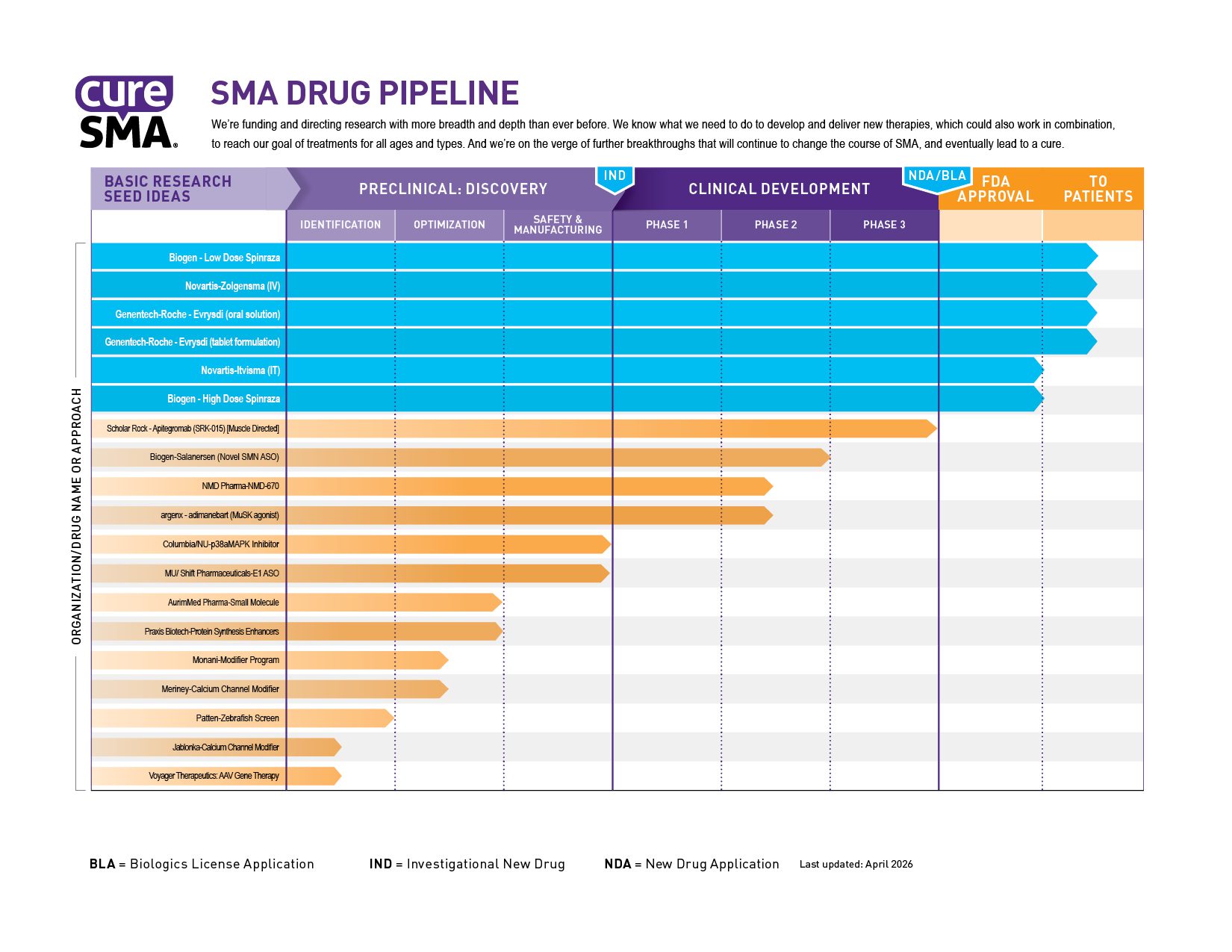
As multiple treatments advance through the SMA Drug Pipeline, researchers and clinicians need new tools to keep pace with the evolving standards of treatment and care. In this session, presenters described three such emerging tools: a registry to capture long-term information about treatment safety and effectiveness; a biomarker of disease progression in infants and children; and a genetic test that facilitates early intervention for infants born with SMA.
Presentation 9. Fatigability and Aerobic Capacity: A Comparative Analysis of Risdiplam and Nusinersen
Presenter: Jacqueline Montes, PT, EdD — Columbia University Irving Medical Center, New York, USA
- Fatigability is a lasting struggle for many people living with SMA, often persisting after treatment. Since survival motor neuron protein (SMN) is found throughout the body and not just in motor neurons, other tissues — including skeletal muscle — may also be vulnerable to low SMN levels.
- Because nusinersen (Spinraza) is injected into the spinal fluid and works mainly in the central nervous system, while risdiplam (Evrysdi) is taken orally and reaches tissues throughout the body, including muscle, researchers wanted to know if this difference relates to fatigability.
- Dr. Montes and colleagues compared 34 ambulatory individuals ages 8-55 treated with either risdiplam or nusinersen, measuring fatigability, exercise tolerance, and leg muscle volume and quality using MRI, ultrasound, walking tests, and cardiopulmonary exercise tolerance testing.
- Exercise performance and fatigability did not differ between the two therapies. Associations were strongest between muscle quality and aerobic capacity, and between muscle volume and efficiency, while muscle quality and volume were only weakly associated with fatigability itself.
- These results point to a need for more work to understand what else contributes to fatigability and to explore whether muscle-targeted therapies could help improve outcomes for ambulatory individuals living with SMA, regardless of which SMN-targeted therapy they are on.
motor neuron: The type of nerve cell that sends messages between the brain and muscles. These signals direct the movement and control of the head, neck, chest, abdomen, and limbs.
muscle-targeted therapy: A type of SMN-independent treatment for SMA that works by maintaining or restoring muscle function without directly increasing SMN protein levels. Researchers often study the use of muscle-targeted therapies alongside SMN-targeted therapies, aiming for better outcomes than either treatment could achieve on its own.
SMN-targeted therapy: Also referred to as “SMN-dependent therapy” and “disease-modifying therapies,” these treatments increase the amount of SMN protein in the body. The four FDA-approved disease-modifying therapies for SMA are onasemnogene abeparvovec-brve (Itvisma), nusinersen (Spinraza), onasemnogene abeparvovec-xioi (Zolgensma), and risdiplam (Evrysdi).
survival motor neuron (SMN) protein: A protein made from the instructions encoded in the SMN1 gene and the low-functioning SMN2 gene. Motor neuron health and function depend on SMN protein.
Presentation 10. Evaluating the Waning-effect of Nusinersen Using the SMA EFFORT
Presenter: Rafael Rodriguez-Torres, PT, DPT — Columbia University Irving Medical Center, New York, USA
- Since its approval, nusinersen (Spinraza) has shown significant benefits for people living with SMA, including improved survival and motor function. However, some individuals have described a ‘wearing off,’ or waning effect between scheduled maintenance doses, with fatigue related symptoms seeming to worsen as the next dose approaches – something that has been difficult to measure in everyday, real-world life.
- To study this, Dr. Rodriguez-Torres and colleagues used the SMA EFFORT, a patient-reported questionnaire that measures perceived physical fatigability by asking about 30 everyday activities, in 45 individuals age 12 and older, treated with nusinersen, completed before and after a scheduled maintenance dose.
- Findings confirm that a wearing-off phenomenon exists in some people treated with nusinersen (12 mg), and that the SMA EFFORT is sensitive to these changes in symptoms over time.
- The SMA EFFORT was also associated with performance-based fatigability and motor function, supporting its potential use – alongside existing motor function assessments – to help better understand the effects of nusinersen dosing, including the benefits of higher-dose regimens.
Presentation 11. Prodromal Swallowing Deficits in Asymptomatic Infants with Spinal Muscular Atrophy: A Source for Suboptimal Treatment Outcomes
Presenter: Katlyn McGrattan, PhD — University of Minnesota, Minnesota, USA
- Research has shown that starting disease-modifying therapy before symptoms appear helps protect swallowing function in many infants with SMA — but 12-16% will still develop feeding difficulties after treatment that are serious enough to require tube use. Dr. McGrattan and colleagues wanted to determine whether subtle swallowing problems might be present before treatment, even in infants who appear to be feeding normally.
- They studied 23 infants with SMA identified through newborn screening, before any symptoms appeared, across four medical centers. Most (70%) had video swallowing studies performed before treatment; the rest were done within a month of starting. All infants had normal feeding and secretion management by outward appearance.
- Despite no visible feeding problems, swallow studies revealed reduced biomechanical function in several areas: 75% of the infants needed an unusually high number of sucks (4 or more), before swallowing, and nearly all (91%) showed some penetration of liquid into the airway, with aspiration observed in 30% of the infants.
- These findings suggest some pre-symptomatic infants may already have subtle, ‘silent’ swallowing changes before treatment — supporting the idea of early prodromal motor neuron involvement. Further research is needed to guide when and how to monitor and support swallowing safely in this population.
aspiration: When liquid or food passes below the vocal cords into the airway leading to the lungs, which can increase the risk of breathing problems or lung infections.
disease-modifying therapy: A treatment that targets the underlying cause of a disease. The three FDA approved disease-modifying therapies for SMA are nusinersen (Spinraza), onasemnogene abeparvovec (Zolgensma), and risdiplam (Evrysdi). Each of these treatments works by increasing levels of SMN protein.
motor neuron: The type of nerve cell that sends messages between the brain and muscles. These signals direct the movement and control of the head, neck, chest, abdomen, and limbs.
prodromal: An early stage where underlying changes have begun, even though no outward symptoms are yet visible.
Presentation 12. Epidural Spinal Cord Stimulation Reduces Intrinsic Gait Abnormalities in SMA
Presenter: Carly Magun, PT, DPT — Columbia University Irving Medical Center, New York, USA
- In SMA, weakness in the hip flexor and knee extensor muscles creates characteristic gait abnormalities. Dr. Magun’s team developed epidural spinal cord stimulation (SCS) — a technology they’ve shown improves movement after spinal cord injury and stroke — which works by stimulating sensory nerve pathways to increase signals reaching motor neurons.
- In a small earlier study, they showed SCS could improve muscle strength, endurance, and gait quality in ambulatory adults with SMA — but it wasn’t clear whether this reflected true improvement in walking mechanics, or compensatory movement patterns instead.
- Dr. Magun and colleagues analyzed detailed joint movement data using 3D motion capture during the Six-Minute Walk Test, comparing gait before and after 29 days of epidural SCS treatment in ambulatory adults with SMA, as part of an ongoing clinical trial.
- Participants walked faster and maintained more consistent speeds during the walk test following SCS. These gains were linked to increased hip joint range of motion, velocity, and acceleration — without changes in foot movement patterns that would suggest compensatory strategies.
- These findings suggest SCS may improve walking by directly enhancing motor neuron function and hip muscle engagement rather than through compensation — offering a potential new complementary treatment approach for motor function in SMA.
motor neuron: The type of nerve cell that sends messages between the brain and muscles. These signals direct the movement and control of the head, neck, chest, abdomen, and limbs.
Presentation 13. The Shuttle Squat Test: A Practical Tool for Assessing Endurance and Proximal Leg Muscle Strength in Spinal Muscular Atrophy
Presenter: Vincent J. Carson, MD – The Clinic for Special Children, Pennsylvania, USA
- Increased access to disease-modifying therapies has allowed children with SMA to achieve and retain motor skills not previously observed, creating a need for new motor function assessments suited to this population.
- Dr. Carson and his colleagues aimed to develop a simple motor function assessment for ambulatory children with SMA that health care providers could use without extensive training.
- The group developed the “Shuttle Squat Test,” a 2-minute test in which participants repeatedly squat to pick up blocks from a basin on the floor and transfer them to a table at hip height while exerting maximum effort. The assessment measures endurance, upper leg muscle strength, and real-world functional ability.
- The researchers then administered the assessment to 25 ambulatory children with SMA and 290 unaffected children. They found that participants with SMA transferred fewer blocks than unaffected participants. Among 10 SMA participants followed for a median of 10 months, 8 improved and 2 declined.
- Dr. Carson and his fellow researchers also compared Shuttle Squat Test results to those of other, well-established motor function assessments to identify ways in which it could be refined.
- As disease-modifying therapies, as well as add-on therapies, continue to allow children to develop well beyond previous motor function limitations, assessments such as the Shuttle Squat Test are needed to keep up with that evolution.
add-on therapy: In the context of SMA, a treatment given alongside an existing disease-modifying therapy with the goal of enhancing its benefits rather than replacing it.
disease-modifying therapy: A treatment that targets the underlying cause of a disease. The four FDA-approved disease-modifying therapies for SMA are onasemnogene abeparvovec-brve (Itvisma), nusinersen (Spinraza), onasemnogene abeparvovec-xioi (Zolgensma), and risdiplam (Evrysdi). Each of these treatments works by increasing levels of SMN protein.
motor function assessments: A clinical outcome measure that checks how well a person can move their muscles and control their body. It is used to track disease progression and treatment response.
Presentation 14. Rasch Analysis of the Spinal Muscular Atrophy Person-Reported Outcome Measure (SMA-PRO) 14 Daily Activities Domain in Children and Adults with SMA
Presenter: Maria Fragala-Pinkham, PT, DPT, DSc – Boston Children's Hospital, Massachusetts, USA
- Dr. Fragala-Pinkham and her colleagues recently developed the SMA Person-Reported Outcome Measure (SMA-PRO) to assess functional abilities in people with all types of SMA. The assessment has three domains: mobility, daily activities, and power wheelchair use.
- Previously, the group showed that the SMA-PRO’s mobility domain is suitable for an SMA population with a wide range of abilities and ages. The objective of this study was to evaluate the appropriateness of the daily activities domain for a diverse SMA population.
- One hundred and twenty caregiver-proxy surveys were completed by caregivers of people with SMA ranging in age from birth through adulthood. Seventy-seven self-report surveys were completed by people living with SMA who were 13 years of age or older. In each group, individuals with a wide range of abilities and ages were represented.
- Using statistical methods to analyze the survey results, Dr. Fragala-Pinkham concluded that the questions effectively captured daily activities across all SMA types. She also concluded that the four-point item response scale efficiently captures a range of ability within each skill, making the assessment sensitive to small but meaningful changes over time. Next, the group will evaluate the properties of the SMA-PRO’s power wheelchair domain.
- Person-reported outcome measures such as the SMA-PRO provide first-person perspectives on how people with SMA and their caregivers perceive functional abilities in everyday life. This type of survey captures important information that clinician-reported assessments alone cannot, ultimately supporting optimal treatment outcomes and clinical care for people with SMA.
caregiver-proxy surveys: Survey in which a caregiver responds on behalf of the person they care for because that person is either too young or otherwise unable to respond.
Presentation 15. Long-Term, Real-World Spatiotemporal and Kinetic Gait Monitoring in Spinal Muscular Atrophy Using AI-Sole
Presenter: Kai-Chun Liu, PhD – Department of Mechanical Engineering, Stevens Institute of Technology, New Jersey, USA
- Established assessments that measure walking ability, or “ambulation,” in people with SMA are performed in a clinical setting over short time frames. Because these tests are performed under controlled conditions, they may not capture subtle changes in gait that are experienced over time in everyday life.
- To address this gap, Dr. Liu and his fellow researchers have developed a digital device called the “AI-Sole.” Worn inside the shoe, the AI-Sole contains sensors that measure multiple aspects of how an individual moves in space throughout their day. The data gathered by the insole is collected in a lightweight pod worn around the ankle.
- In this study, four ambulatory adults with SMA and four unaffected individuals wore the AI-Sole during their normal daily activities for at least 70 hours. Participants also completed established clinical outcome measures of ambulation.
- When analyzed, AI-Sole data showed differences between adults with SMA and unaffected adults in stride speed and foot-pressure patterns, particularly during shorter walking bouts. These same insole-based measures were also linked to participants' scores on established clinical ambulation tests.
- These findings suggest that no single measure captures the full picture of ambulation impairment in SMA. Wearable technologies like the AI-Sole may be able to detect small changes in ambulation in everyday life settings, providing valuable feedback on disease progression and treatment response.
gait: The exact rhythm and style of walking, including foot strikes, joint angles, and stride length.
Presentation 16. Long-Term Real-World Outcomes Following Onasemnogene Abeparvovec Monotherapy for Patients with Spinal Muscular Atrophy: Findings from the RESTORE Registry
Presenter: Richard Finkel, MD – Center for Experimental Neurotherapeutics, St. Jude Children’s Research Hospital, Tennessee, USA
- RESTORE is a multinational, observational registry that captures long-term, real-world data on people with genetically confirmed SMA.
- Using RESTORE registry data, Dr. Finkel’s research group conducted a study on long-term safety and effectiveness of intravenous onasemnogene abeparvovec-xioi (Zolgensma). This study built on prior research conducted on a smaller group of RESTORE participants for a shorter follow-up period.
- Two hundred and fifty-seven infants with SMA were included in the study. The median ages at SMA diagnosis and onasemnogene abeparvovec-xioi infusion were 1 month and 3 months, respectively. Most infants had two or three SMN2 gene copies and were treated in the U.S.
- 129 of 257 participants (50.2%) had an adverse event of any kind and 62 (24.1%) had a related adverse event, including ten considered serious (3.9%). The most common adverse events of special interest were hepatotoxicity (29.2%), transient thrombocytopenia (14.0%), and cardiac events (8.1%). Seven deaths (2.7%) occurred, but none were considered related to onasemnogene abeparvovec-xioi.
- Dr. Finkel and his colleagues used three well-established clinical outcome measures to assess participants’ motor function. Overall, most participants demonstrated improvements in motor function scores, and motor function improvements were maintained for up to five years after treatment.
- Registries like RESTORE enable researchers to continue to gather long-term information on disease progression, treatment outcomes, and unmet needs. Insights from registry data may help clinicians, as well as individuals with SMA and their families, make treatment decisions.
clinical outcome measure: An assessment or survey used in medical care or research to see how a patient's health, symptoms, daily function, or survival changes over time.
hepatotoxicity: Damage or injury to the liver.
median: The middle value in a set of numbers.
real-world data: Health information collected during a person’s routine medical care. It shows a patient's health status and how treatment and clinical care are working in everyday life.
registry: A secure digital database that stores information about people with a specific health condition, like SMA. It helps doctors and researchers track and identify patterns in disease progression and treatment outcomes.
SMN2 copy number: The number of copies of the SMN2 gene a person has. In SMA, having more SMN2 copies generally helps the body make more SMN protein and is often linked with less severe disease.
thrombocytopenia: A lower-than-normal number of platelets in the blood. Platelets help form blood clots to slow or stop bleeding and to help wounds heal.
Presentation 17. Neurofilament Light Chain as a Biomarker in Spinal Muscular Atrophy
Presenter. Charlotte J Sumner, MD – Johns Hopkins University School of Medicine, Maryland, USA
- Neurofilament (Nf) proteins provide structure within the axons of motor neurons. When motor neurons become unhealthy and axons break down, Nf is shed and can be detected in cerebrospinal fluid and the bloodstream. As such, Nf is used as a biomarker in several neurological diseases, with generally higher levels indicating more neurodegeneration.
- In this study, Dr. Sumner and her colleagues aimed to determine if a form of Nf, neurofilament light chain (NfL), has potential as a biomarker of disease progression and treatment response in infants and young children with SMA. NfL can be measured in blood, making it easy for clinicians to take a sample from patients.
- The group measured NfL levels in presymptomatic and symptomatic infants and young children before and during treatment with nusinersen (Spinraza). They found that pre-treatment NfL levels were highest in the youngest infants with the most severe types of SMA. Notably, NfL was elevated in 9 out of 10 presymptomatic infants with two SMN2 copies, suggesting neurodegeneration can be active before symptoms appear.
- In previously untreated infants and children with two or three SMN2 copies, NfL levels dropped rapidly during the nusinersen loading period and remained low. High-dose nusinersen produced faster reductions than low-dose nusinersen.
- In participants who were previously treated with intravenous onasemnogene abeparvovec-xioi (Zolgensma), baseline NfL levels were still higher than levels in both healthy children and nusinersen-treated participants of similar ages, suggesting ongoing neurodegeneration.
- These data indicate that NfL may be developed as a biomarker of disease progression and treatment response in SMA for use in research studies and treatment decision making.
biomarker: A biological molecule found in blood, other body fluids, or tissues that is a sign of a normal or abnormal process, or of a condition or disease. A biomarker may be used to see how well the body responds to a treatment for a disease or condition.
loading period: An initial span of time at the start of a treatment when a person takes larger or more frequent doses of a drug to build up levels in the body quickly.
motor neuron: The type of nerve cell that sends messages between the brain and muscles. These signals direct the movement and control of the head, neck, chest, abdomen, and limbs.
SMN2 copy number: The number of copies of the SMN2 gene a person has. In SMA, having more SMN2 copies generally helps the body make more SMN protein and is often linked with less severe disease.
Presentation 18. Single-gene NIPT Leads to Earlier Diagnosis and Optimized Treatment of Newborns with Infantile-onset Spinal Muscular Atrophy: A Case Series
Presenter: Karlla W. Brigatti MS, CGC – The Clinic for Special Children, Pennsylvania, USA
- Recent research findings suggest that the weeks before birth may be the optimal treatment window for infants with SMA.
- Single-gene NIPT (sgNIPT) is a test done during pregnancy to check fetal DNA in the pregnant parent's bloodstream for a specific inherited condition, without the need for an invasive procedure such as amniocentesis. In this study, Ms. Brigatti and her fellow researchers studied whether sgNIPT could determine fetal SMA risk and guide treatment timing for those who screened positive.
- Thirteen pregnant women who had a one in four risk of giving birth to a baby with infantile-onset SMA underwent sgNIPT for SMA at approximately 27 weeks’ gestation. Four women received a high-risk score for a fetus with SMA.
- Three of these women declined amniocentesis, instead planning with their care team to induce labor at 37 weeks, confirm diagnosis genetically after birth, and start risdiplam (Evrysdi) immediately as a bridge to intravenous onasemnogene abeparvovec-xioi (Zolgensma). The fourth chose amniocentesis, which confirmed SMA; further results for this individual were not reported.
- All three babies were genetically confirmed to have SMA shortly after birth. (One baby was delivered at approximately 32 weeks for maternal health reasons.) They each began to receive risdiplam within days of birth, received onasemnogene abeparvovec-xioi within about 5-6 weeks, and have since met age-appropriate motor and developmental milestones.
- Ms. Brigatti’s group plans to continue to follow the health and development of these babies to determine the long-term impact of this treatment approach. Advances in biotechnology such as sgNIPT may enable parents to make more informed delivery and treatment plans for infants who are at risk for SMA.
amniocentesis: A prenatal test that removes a small amount of the fluid surrounding a baby in the womb to check for inherited conditions like SMA.
Friday, Day 3 — Research Meeting Sessions
Moderator: Adrian Krainer, PhD — Cold Spring Harbor Laboratory, New York, USA
With disease-modifying therapies now part of care for many people living with SMA, researchers are turning to new questions: how existing treatments hold up over years of use, whether switching or adjusting doses can offer added benefit, and whether therapies that target muscle directly might complement those that target SMN protein. In this final session on the last day of the conference, presenters shared long-term and emerging data spanning SMN-targeted therapies, gene therapy, and muscle-targeted approaches — together painting a picture of the real progress made, alongside the questions the field is still working to answer.
Presentation 19. Safety and Pharmacodynamic Effects of Emugrobart in Combination with Risdiplam in Ambulant and Non-ambulant Participants with SMA: MANATEE Part 1
Presenter: Laurent Servais, MD, PhD — MDUK Oxford Neuromuscular Centre, University of Oxford, United Kingdom
- SMN-targeted therapies have transformed outcomes for many people living with SMA by addressing its underlying genetic cause. Even so, muscle atrophy and weakness can persist, because muscle itself isn’t a direct target of these treatments.
- Myostatin is a protein that acts as a brake on muscle growth. Emugrobart is an investigational antibody treatment designed to bind and block myostatin, potentially allowing muscle to grow more than it normally would with SMA — offering a different approach from SMN-targeted therapies. Researchers wanted to know whether adding it to risdiplam (Evrysdi) would offer additional muscle or functional benefits.
- MANATEE Part 1 tested this combination in 97 children ages 2-10, all previously treated with an SMN-targeted therapy, across ambulatory and non-ambulatory groups. Participants received low-dose emugrobart, high-dose emugrobart, or placebo — all alongside continued risdiplam — for 24 weeks, with muscle size (via imaging) and safety as key measures.
- Emugrobart was generally well tolerated and there were no trial withdrawals due to side effects. High-dose emugrobart showed small increases in thigh and calf muscle size in ambulatory participants, and small increases in upper-limb muscle mass in non-ambulatory participants — though these changes were not statistically significant, and overall body mass in non-ambulatory participants did not clearly improve compared with placebo.
- Overall, muscle growth and exploratory functional outcomes were not consistent or robust enough to support a clear benefit of emugrobart in this study population — even though blood tests confirmed the drug was reaching and blocking its intended target.
- Following this assessment, Genentech announced in March 2026 that it is discontinuing development of emugrobart for SMA, as it did not consistently improve muscle growth or motor function compared with risdiplam alone. You can read Genentech’s community letter here: https://www.curesma.org/genentech-issues-community-letter-regarding-emugrobart/
SMN-targeted therapy: Also referred to as “SMN-dependent therapy” and “disease-modifying therapies,” these treatments increase the amount of SMN protein in the body. The four FDA-approved disease-modifying therapies for SMA are onasemnogene abeparvovec-brve (Itvisma), nusinersen (Spinraza), onasemnogene abeparvovec-xioi (Zolgensma), and risdiplam (Evrysdi).
Presentation 20. Final Results from the JEWELFISH Study: 5-year Risdiplam Treatment in Non-treatment-naïve Individuals with SMA
Presenter: Claudia Chiriboga, MD — Columbia University Irving Medical Center, New York, USA
- Research often focuses on how a treatment performs in people taking it for the first time. But many people with SMA have already been on one treatment and may switch to a different one — for example, if their needs changed, or as new options become available. JEWELFISH is a long-term study designed to understand the safety and effects of risdiplam (Evrysdi) specifically in this ‘switching’ population: people previously treated with another disease-modifying therapy, including nusinersen (Spinraza), onasemnogene abeparvovec (Zolgensma), or an earlier investigational treatment.
- The study enrolled 174 participants with a broad range of ages, SMA types, and motor function levels; many had a high degree of motor impairment and chronic disease. Participants were followed for five years while taking daily oral risdiplam, with researchers tracking safety, SMN protein levels, and motor function.
- Risdiplam led to a rapid increase in survival motor neuron (SMN) protein that was sustained over the full five years. Safety findings matched the known safety profile of risdiplam, regardless of which treatment participants had used before.
- Overall, 69% of participants remained on risdiplam and completed the full 5-year study, supporting its long-term safety and tolerability in a broad population of people living with SMA.
disease-modifying therapy: A treatment that targets the underlying cause of a disease. The four FDA-approved disease-modifying therapies for SMA are onasemnogene abeparvovec-brve (Itvisma), nusinersen (Spinraza), onasemnogene abeparvovec-xioi (Zolgensma), and risdiplam (Evrysdi). Each of these treatments works by increasing levels of SMN protein.
survival motor neuron (SMN) protein: A protein made from the instructions encoded in the SMN1 gene and the low-functioning SMN2 gene. Motor neuron health and function depend on SMN protein.
Presentation 21. Phase 1 Interim Results Evaluating the Safety, Tolerability, Pharmacokinetics, and Exploratory Efficacy of Salanersen for Spinal Muscular Atrophy
Presenter: Thomas Crawford, MD — Johns Hopkins University School of Medicine, Maryland, USA
- Salanersen is a new investigational treatment for SMA that works similarly to nusinersen (Spinraza), correcting how the survival motor neuron 2 gene (SMN2) gene is read to produce more survival motor neuron (SMN) protein — but with a new chemical design that may allow it work with just one dose a year.
- This study focused on children ages 6 months to 12 years who had previously received gene therapy (onasemnogene abeparvovec) but had a suboptimal response, to see whether adding salanersen might help. Participants received either a 40 mg or 80 mg dose and were followed for at least one year. Safety, neurofilament levels to measure nerve cell damage, and standard motor milestone and function scales were tracked.
- Salanersen was generally well tolerated at both doses. Among children with elevated levels of neurofilament light chain levels at the study’s start, levels dropped by about 75% within six months and stayed lower over time. At the one-year mark, half of the participants had achieved new motor milestones — many earlier or more advanced than would typically be expected given their prior treatment history and starting point.
- While this was a small, early-phase study, the consistency of improvement across multiple measures suggests salanersen may offer meaningful benefit for children with SMA. The 80 mg dose is now being tested in larger phase 3 studies across a broader range of people with SMA.
- Separately, the FDA has granted Breakthrough Therapy Designation to salanersen, a status intended to help speed the development and review of promising treatments for serious conditions. You can find additional information, including a link to Biogen’s press release, here: https://www.curesma.org/fda-grants-breakthrough-therapy-designation-to-biogens-salanersen-for-spinal-muscular-atrophy/
survival motor neuron (SMN) protein: A protein made from the instructions encoded in the SMN1 gene and the low-functioning SMN2 gene. Motor neuron health and function depend on SMN protein.
survival motor neuron 2 gene (SMN2): A "backup" gene that produces some SMN protein, but a change in its genetic code causes most of that protein to be short and unstable. Everyone with SMA has at least one copy of SMN2, and having more copies is generally associated with milder disease. Several current and investigational treatments work by helping SMN2 produce more full-length, functional SMN protein.
Presentation 22. DEVOTE Part C and ONWARD Integrated Results: Exploring High Dose Nusinersen in Nusinersen-Experienced Participants with Spinal Muscular Atrophy
Presenter: Richard Finkel, MD — St. Jude Children’s Research Hospital, Tennessee, USA
- DEVOTE and its long-term extension, ONWARD, are studying an investigational higher-dose regimen of nusinersen (Spinraza) in people already being treated with the standard (12 mg) dose. Since motor function gains from nusinersen typically level off after the first few years of treatment, researchers wanted to know whether switching to a higher dose could offer additional benefit.
- DEVOTE Part C included 40 children and adults ages 4-65 who had been on standard-dose nusinersen for a median of nearly four years before transitioning to the higher-dose regimen — a 50 mg starting dose, then 28 mg maintenance doses. Of these, 39 continued into the long-term extension, ONWARD, and were followed for up to 2.7 years afterward, tracking safety, motor function, and plasma neurofilament light chain (NfL) levels, a marker of nerve cell health.
- The higher-dose regimen was generally well tolerated, with a safety profile broadly consistent with the standard dose. In real-world studies, the biggest motor gains from standard-dose nusinersen are typically seen in the first few years of treatment — and most participants were already past that point. Even so, many showed continued improvement in motor scores after switching to the higher dose, and those who could walk maintained their walking distance and endurance. NfL levels remained low and within a healthy range in younger participants throughout the study.
- These findings support transitioning people already on standard-dose nusinersen to the higher-dose regimen as a reasonable option for continued motor function benefit, even after years of prior treatment.
- These DEVOTE results were published in Nature Medicine in February 2026. You can read more here: https://www.curesma.org/biogen-announces-results-from-the-phase2-3-devote-study/
Presentation 23. Intravenous Onasemnogene Abeparvovec Gene Replacement Therapy for Presymptomatic Spinal Muscular Atrophy: Long-Term Follow-Up Analysis
Presenter: Megan Waldrop, MD – The Ohio State University, Ohio, USA
- In this follow-up to the phase 3 SPR1NT trial, Dr. Waldrop's research group continued tracking children who received a single intravenous infusion of onasemnogene abeparvovec-xioi (Zolgensma) as presymptomatic infants, to see whether the therapy's early benefits held up over time and whether any new safety concerns emerged.
- Twenty-seven children were followed for 2.8 to 7.2 years after treatment. Thirteen had two copies of SMN2 and 13 had three copies. Data for one child with four copies was not included. Researchers tracked motor development through milestone achievement and a standard clinical outcome measure. Safety data were obtained from regular health checkups, clinical testing, and side effect monitoring.
- Six children experienced adverse events, and three children had serious adverse events, none of which were considered related to treatment. No additional safety concerns were identified.
- Of the 13 children with two SMN2 copies, seven had already reached all motor milestones, including walking, by the end of the original trial; the remaining six achieved these milestones during the follow-up. Motor function improved in both groups, although one child required non-invasive ventilatory support, and one child required feeding support.
- Importantly, six children with two SMN2 copies and two children with three copies received add-on therapy during the study. However, data were not presented regarding how add-on therapy affected overall outcomes.
- Together, these findings suggest that early treatment with onasemnogene abeparvovec-xioi in infants with SMA may result in continued motor function gains, as well as independence from nutritional and ventilatory support, through early childhood.
add-on therapy: A treatment given alongside an existing disease-modifying therapy with the goal of enhancing its benefits rather than replacing it.
clinical outcome measure: An assessment or survey used in medical care or research to see how a patient's health, symptoms, daily function, or survival changes over time.
SMN2 copy number: The number of copies of the SMN2 gene a person has. In SMA, having more SMN2 copies generally helps the body make more SMN protein and is often linked with less severe disease.
Presentation 24. Intrathecal Onasemnogene Abeparvovec (OAV101) for Patients with Spinal Muscular Atrophy (SMA): Extended 64-Week Outcomes from the Phase 3 STEER Study
Presenter: Crystal M. Proud, MD – Children’s Hospital of The King’s Daughters, Virginia, USA
- Onasemnogene abeparvovec-xioi (Zolgensma) was FDA-approved as a one-time intravenous infusion for infants and children 2 years old and younger.
- The STEER study was a 52-week phase 3 study that tested the safety and efficacy of intrathecally injected onasemnogene abeparvovec-brve (Itvisma). Participants were previously untreated individuals with SMA aged 2 to 18 years old and were able to sit but had never been ambulatory. Study data showed statistically significant improvement in motor function scores, as well as a favorable safety and tolerability profile.
- In the present extension study, Dr. Proud and her research group followed participants from the original STEER study until week 64 to characterize the longer-term motor function outcomes and safety of onasemnogene abeparvovec-brve.
- To evaluate safety, the researchers combined data from two groups of participants: 75 who were treated with onasemnogene abeparvovec-brve at the beginning of the STEER study, and 46 who had originally received a sham treatment but went on to receive onasemnogene abeparvovec-brve at the beginning of the present study. Across all treated participants, they found no new safety concerns compared to the original STEER study data.
- Using established clinical outcome measures, Dr. Proud's group evaluated motor function in the 67 participants who were originally treated with onasemnogene abeparvovec-brve and continued into the extension study. These participants demonstrated sustained and progressive motor function gains over 64 weeks (which included the original 52-week study period). "
- Longer-term data like these help clinicians and parents of children with SMA evaluate the benefits and risks of new treatment options as they become available.
clinical outcome measure: An assessment or survey used in medical care or research to see how a patient's health, symptoms, daily function, or survival changes over time.
efficacy: The ability of a drug, procedure, or surgery to produce a desired effect; the effectiveness of a treatment under controlled circumstances, like in a clinical trial.
extension study: A study that allows participants in a clinical trial to continue to participate as researchers keep observing and measuring the long-term safety and effectiveness of the treatment that was tested first in the clinical trial.
intrathecally injected: Delivered directly into the fluid-filled space that surrounds the spinal cord and brain.
Presentation 25. Impact of Baseline Characteristics on Apitegromab Efficacy in Patients with Spinal Muscular Atrophy
Presenter: Jing Marantz, MD, PhD – Scholar Rock, Inc., Massachusetts, USA
- Apitegromab is an investigational muscle-targeted monoclonal antibody that inhibits the activation of a protein called myostatin. When activated, myostatin restricts muscle growth, so preventing its activation can lead to increased muscle mass.
- In this presentation, Dr. Marantz shared data from the phase 3 SAPPHIRE and phase 2 TOPAZ trial, in which participants were treated with apitegromab every four weeks. In both studies, researchers measured levels of inactive, or "latent," myostatin in participants' blood before and during treatment. They also assessed motor function using clinical outcome measures suited to each study population. The scientists wanted to determine whether baseline characteristics, including latent myostatin level, age, muscle mass, and motor function, impacted apitegromab's effectiveness.
- The phase 3 SAPPHIRE trial included 188 non-ambulatory participants with SMA, ages 2 to 21 years. All participants were already receiving an SMN-targeted therapy [nusinersen (Spinraza) or risdiplam (Evrysdi)]. They found that before treatment, latent myostatin levels were generally similar regardless of disease severity or age group (2-12 versus 13-21 years). Over 52 weeks of apitegromab treatment, participants' latent myostatin levels increased and motor function improved compared to placebo. These trends held regardless of a participant's baseline latent myostatin level, age, muscle mass, or motor function.
- The phase 2 TOPAZ trial comprised 12 ambulatory participants with SMA ages 2-21 years. Researchers found that over the course of the four-year study, increases in latent myostatin were sustained and motor function stabilized.
- As new muscle-targeted therapies such as apitegromab advance through the SMA Drug Pipeline, options for combination therapy approaches to treatment will increase for people with SMA and their families.
baseline: An initial measurement of a condition taken at the beginning of a research study. It used as a starting point against which later measurements are compared to see if any changes occur over time.
clinical outcome measure: An assessment or survey used in medical care or research to see how a patient's health, symptoms, daily function, or survival changes over time.
combination therapy: Using two or more treatments at the same time or in sequence, whether they work in similar or different ways.
monoclonal antibody: A type of protein that is made in the laboratory and can bind to a specific target in the body to treat a disease.
muscle-targeted therapy: A type of SMN-independent treatment for SMA that works by maintaining or restoring muscle function without directly increasing SMN protein levels. Researchers often study the use of muscle-targeted therapies alongside SMN-targeted therapies, aiming for better outcomes than either treatment could achieve on its own.
SMN-targeted therapy: Also referred to as “SMN-dependent therapy” and “disease-modifying therapies,” these treatments increase the amount of SMN protein in the body. The four FDA-approved disease-modifying therapies for SMA are onasemnogene abeparvovec-brve (Itvisma), nusinersen (Spinraza), onasemnogene abeparvovec-xioi (Zolgensma), and risdiplam (Evrysdi).
Presentation 26. Post Hoc Analyses from the Phase 3 SAPPHIRE Study Evaluating Apitegromab in Patients with Non-ambulatory Type 2 or 3 Spinal Muscular Atrophy
Presenter: Jena M. Krueger, MD – Helen DeVos Children’s Hospital Neurology-Grand Rapids, Michigan, USA
- Prior phase 3 SAPPHIRE data analysis (see Presentation 25) has revealed that apitegromab, a muscle-targeted therapy, helped improve motor function in individuals who had received disease-modifying therapy. In this presentation, Dr. Krueger described extended analysis to determine the degree to which characteristics like disease-modifying treatment duration, time since symptom onset, and baseline motor function influenced how much benefit participants experienced from apitegromab.
- As in the prior analysis, participants were non-ambulatory, ages 2 to 21 years, and were already receiving an SMN-targeted therapy (nusinersen or risdiplam). In addition, they received one of two apitegromab doses (10 mg/kg or 20 mg/kg) plus their SMN-targeted therapy, or a placebo plus their SMN-targeted therapy, for 12 months.
- Dr. Krueger’s group found that although motor function improvements were seen across all groups compared to placebo, the improvements were most pronounced among participants who had been on their SMN-targeted therapy for two years or less before starting apitegromab. Participants with longer treatment histories, including those on SMN-targeted therapy for more than six years, also showed improvement, though to a more modest degree.
- Similarly, those who began apitegromab within five years of symptom onset saw the largest gains in motor function, while those whose symptoms had started more than ten years earlier still experienced improvement relative to placebo.
- Participants who had higher motor function scores at the start of the study experienced the greatest improvement after 12 months of apitegromab, though those who started with lower motor function scores also experienced smaller gains.
- Together, these findings may help inform people living with SMA and their families about potential outcomes from combined muscle-targeted and SMN-targeted treatment approaches, depending on factors like treatment history, symptom onset, and current motor function.
disease-modifying therapy: A treatment that targets the underlying cause of a disease. The four FDA-approved disease-modifying therapies for SMA are onasemnogene abeparvovec-brve (Itvisma), nusinersen (Spinraza), onasemnogene abeparvovec-xioi (Zolgensma), and risdiplam (Evrysdi). Each of these treatments works by increasing levels of SMN protein.
muscle-targeted therapy: A type of SMN-independent treatment for SMA that works by maintaining or restoring muscle function without directly increasing SMN protein levels. Researchers often study the use of muscle-targeted therapies alongside SMN-targeted therapies, aiming for better outcomes than either treatment could achieve on its own.
placebo: An inactive substance that looks the same as, and is given the same way as, the active drug or treatment being tested in a research study.
SMN-targeted therapy: Also referred to as “SMN-dependent therapy” and “disease-modifying therapies,” these treatments increase the amount of SMN protein in the body. The four FDA-approved disease-modifying therapies for SMA are onasemnogene abeparvovec-brve (Itvisma), nusinersen (Spinraza), onasemnogene abeparvovec-xioi (Zolgensma), and risdiplam (Evrysdi).