





Each year, Cure SMA invites scientists from around the world to submit funding proposals for basic research projects that address specific unanswered questions in spinal muscular atrophy (SMA) biology. Our Scientific Advisory Board ranks the submitted proposals based on their scientific merit and their alignment with Cure SMA’s research priorities. Funding is then awarded to the highest-ranked projects.
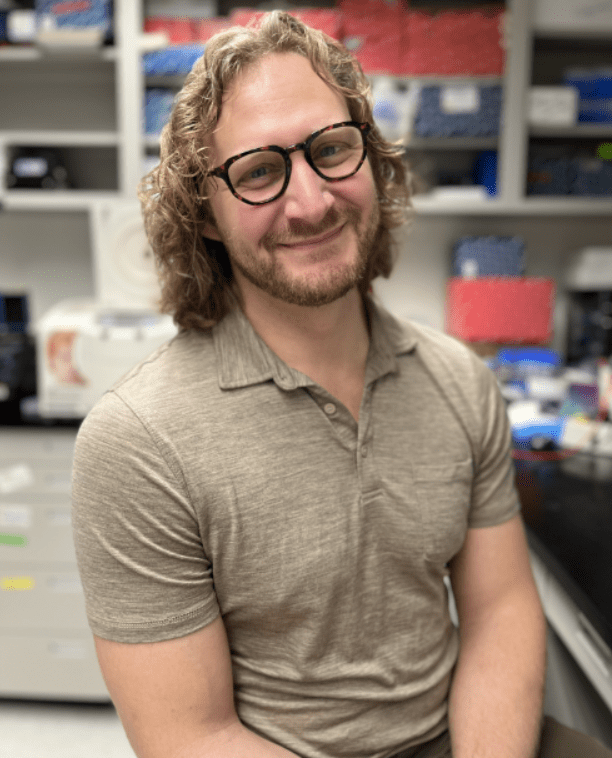
Meet Dr. Anton Blatnik, PhD
Anton Blatnik, PhD, has been awarded $150,000 for his research project “Suppressors of SMA and modified SMN interactions.”
Dr. Anton Blatnik is a scientist studying the molecular mechanisms that drive neuromuscular disease and gene expression. A native Ohioan, he earned his bachelor’s degree in biochemistry from Ohio Northern University and completed his doctoral training at The Ohio State University. He is currently a Postdoctoral Fellow in Genetics and Genome Sciences at Case Western Reserve University in Ohio and has more than 12 years of experience studying SMA and survival motor neuron (SMN) protein. As a graduate student, he worked on foundational SMN biology and early therapeutic strategies that contributed to the development of Zolgensma. In his current role, he also trains undergraduate students in SMA research, continuing his commitment to advancing both discovery and education in the field.
In work previously supported by Cure SMA, Dr. Blatnik investigated the role of SMN in Sm-ring assembly, a key step in the processing and transport of RNA within cells. That project addressed a long-standing question in SMA biology by testing whether disruption of Sm-ring assembly and RNA processing is a direct consequence of SMN deficiency that contributes to disease development, helping to clarify the importance of SMN function beyond protein abundance alone. These findings were published in 2025 and are available here: Sm-site containing mRNAs can accept Sm-rings and are downregulated in Spinal Muscular Atrophy
Spinal muscular atrophy (SMA) is caused by insufficient survival motor neuron (SMN) protein, but it remains unclear which specific functions of SMN are required to keep motor neurons healthy. Building directly on his prior Cure SMA-funded work, Dr. Blatnik will study a unique mouse model that produces a modified form of the SMN protein. Although this protein is present at levels usually associated with SMA, the mice do not develop the disease, indicating that critical SMN functions are preserved. The study will also examine the role of a powerful genetic modifier that further suppresses SMA symptoms. Gene expression and protein interactions will be examined in the mice to identify the SMN-dependent pathways required for disease prevention. By defining the SMN functions that are most critical for health, this work may support the development of targeted treatments that complement existing SMA therapies by strengthening specific SMN functions, rather than simply increasing SMN levels. The findings may also reveal biomarkers that help predict disease progression or treatment response and improve understanding of why SMA severity varies among individuals.
Glossary:
biomarkers: a measurable indicator of a biological state or condition that can help researchers and doctors monitor disease processes or treatment response.
genetic modifier: a gene or genetic change that does not cause a disease by itself, but changes how severe the disease is or how it shows up. In SMA, genetic modifiers can make symptoms milder or more severe, even when SMN levels are similar.
mouse model: a laboratory mouse that has been genetically altered to mimic key aspects of a human disease. They allow researchers to study conditions and test treatments.
RNA: a molecule that carries instructions from DNA and helps make proteins. RNA acts as a messenger, telling cells when and how to build proteins needed for normal function. When RNA is not handled or processed correctly, cells, especially nerve and muscle cells, cannot function properly.
SMN-dependent pathways: chains of biological steps inside cells that rely on SMN protein to work properly. When SMN does not function as it should, these pathways can break down and contribute to disease.
Sm-ring: a small ring-shaped structure made of proteins that form around RNA molecules and helps them get processed correctly. Without properly formed Sm-rings, RNA cannot be prepared or delivered as needed, disrupting normal cell function. In SMA, low levels of the SMN protein interfere with the formation of these rings.
Cure SMA’s top basic research priorities for 2026 include:
- Enhancing understanding of the molecular, cellular, and biochemical mechanisms that underlie SMA pathology.
- Generating key reagents and tools to facilitate drug development and clinical trials.
- Identifying new therapeutic strategies for treating SMA.
- Identifying drug targets that work synergistically with SMN-upregulating therapeutics to benefit older and symptomatic patients.
In 2026, Cure SMA awarded a total of $750,000 to six scientists to pursue these research objectives!
Thank You!
Special thanks to the Concepcion Family, Nunemaker Family, Weisman Family, Luke 18:1 Foundation, Dhont Foundation, and Cure for Casey Foundation for their generosity to Cure SMA in our quest to invest in basic research that will ultimately drive the next generation of SMA treatments.