





Each year, Cure SMA invites scientists from around the world to submit funding proposals for basic research projects that address specific unanswered questions in spinal muscular atrophy (SMA) biology. Our Scientific Advisory Board ranks the submitted proposals based on their scientific merit and their alignment with Cure SMA’s research priorities. Funding is then awarded to the highest-ranked projects.
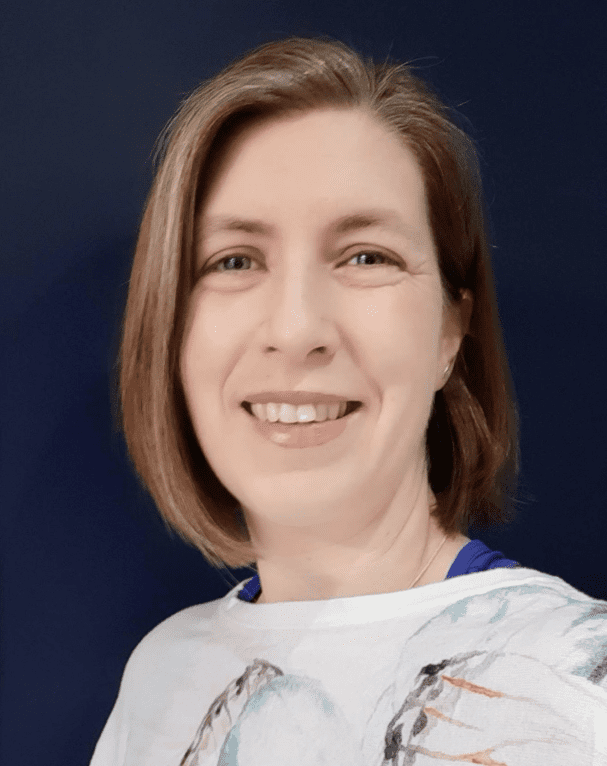
Meet Dr. Lyndsay Murray, PhD
Lyndsay Murray, PhD, has been awarded $75,000 for her research project “Understanding and Targeting Post-Treatment Deficits in the Motor Unit in Mouse Models of Spinal Muscular Atrophy.”
Dr. Murray is a principal investigator based in Edinburgh, Scotland, where she leads a research team that uses mouse models of SMA to better understand how motor neurons degenerate and recover following treatment. She has been involved in SMA research since beginning her PhD in 2006. Her team focuses particularly on the connections between motor neurons and muscle, examining how those connections change after SMN up-regulating therapy. This is her fourth research grant from Cure SMA, reflecting her continued contributions to the field.
SMN-restoring therapies have transformed outcomes for people living with SMA. However, some individuals continue to experience muscle weakness and fatigue after treatment. Studies in both patients and mouse models suggest that some motor units remain vulnerable after SMN levels are increased, and not all motor units are affected equally. Dr. Murray’s work seeks to better understand what changes remain within the motor unit after SMN levels are restored.
In this Cure SMA-funded project, Dr. Murray will use in vivo electrophysiology to evaluate motor unit function in treated SMA mouse models. Her team will combine functional recordings from in vivo electrophysiology with detailed structural analysis to assess recovery in muscles that differ in vulnerability. This approach will allow them to identify which aspects of motor unit structure and function improve after SMN up-regulation and which areas show incomplete recovery.
By carefully defining which aspects of motor unit function fully recover and which do not, this research aims to determine whether mouse models accurately reflect post-treatment challenges seen in people with SMA. These findings will help clarify the biological basis of ongoing weakness and inform future efforts to improve long-term motor function in people living with SMA.
mouse model: a laboratory mouse that has been genetically altered to mimic key aspects of a human disease, allows researchers to study the condition and test treatments.
motor neurons: specialized nerve cells that carry signals from the brain and spinal cord to muscles, allowing the body to move.
SMN up-regulating therapy: a treatment designed to increase the amount of survival motor neuron (SMN) protein in the body, typically by helping cells use the SMN2 gene more effectively to produce functional SMN protein.
motor units: a motor neuron and all the muscle fibers it controls. When the motor neuron sends an electrical signal, all the muscle fibers in its motor unit contract together to produce movement.
in vivo electrophysiology: a research technique used to measure electrical activity in living tissues, allowing scientists to record how well nerves and muscles communicate in real time.
Cure SMA’s top basic research priorities for 2026 include:
- Enhancing understanding of the molecular, cellular, and biochemical mechanisms that underlie SMA pathology.
- Generating key reagents and tools to facilitate drug development and clinical trials.
- Identifying new therapeutic strategies for treating SMA.
- Identifying drug targets that work synergistically with SMN-upregulating therapeutics to benefit older and symptomatic patients.
In 2026, Cure SMA awarded a total of $750,000 to six scientists to pursue these research objectives!
Thank You!
Special thanks to the Concepcion Family, Nunemaker Family, Weisman Family, Luke 18:1 Foundation, Dhont Foundation, and Cure for Casey Foundation for their generosity to Cure SMA in our quest to invest in basic research that will ultimately drive the next generation of SMA treatments.