





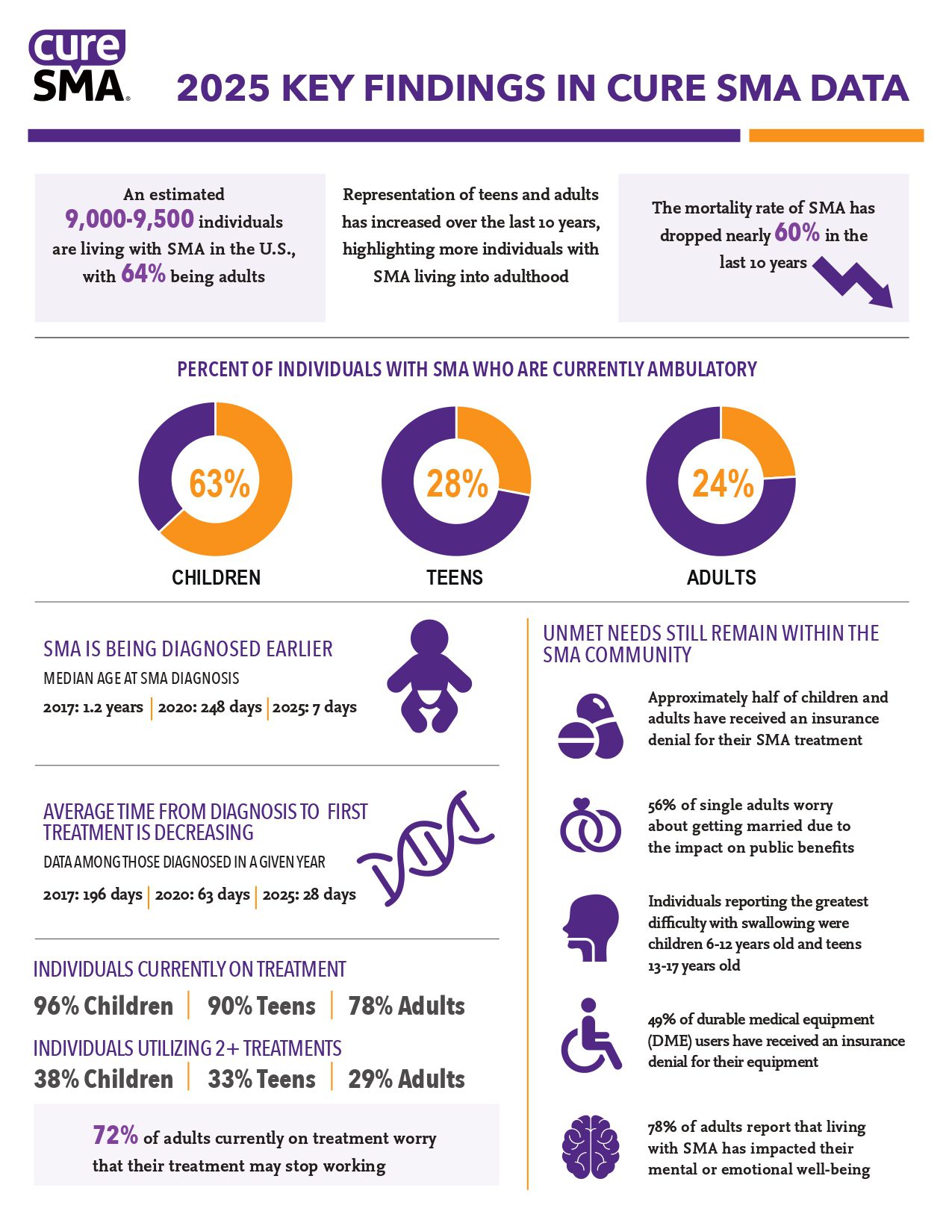
Cure SMA is pleased to announce the publication of the 5th annual State of SMA report. Drawing on data collected by Cure SMA through 2025, this report features insights into the progress and ongoing challenges impacting people with spinal muscular atrophy (SMA) and their families. Previously, the annual report has also been used to advocate for the SMA community by informing the FDA about unmet needs and educating insurers about access barriers.
The 2025 State of SMA report presents a snapshot of the quickly changing landscape of SMA. More specifically, the report includes:
- Current clinical, social, and financial unmet needs of those living with SMA or caring for someone with SMA
- The continued increase in the number of individuals with SMA living into adulthood
- An assessment of how well the demographics of individuals in our databases reflect those of the overall SMA population
- The changing prevalence of SMA types and SMN2 copy number
- The current motor function status of children and adults living with SMA
- The impact of social determinants of health on lived experiences of people with SMA and their caregivers
- The increase in SMA diagnoses via newborn and prenatal screening
- SMA treatment use, experiences, and remaining unmet needs
- Changes in activities of daily living
- Access to SMA treatments, care, and durable medical equipment
- Additional health conditions affecting people with SMA… and much more!
Cure SMA is thankful to all individuals with SMA, their families, and healthcare providers treating those with SMA, who have generously shared their experiences with us through our surveys and registries. Their willingness to provide details about how SMA impacts families and daily lives allows us to advance the understanding of this disease and lays the foundation for continued progress on behalf of our community. Cure SMA is also thankful for the support and funding provided by the Cure SMA Industry Collaboration (SMA-IC) for research initiatives, including this report.
To view the report, please click here.
The Cure SMA Industry Collaboration
The Cure SMA Industry Collaboration (SMA-IC) was established in 2016 to leverage the experience, expertise, and resources of pharmaceutical and biotechnology companies, as well as other nonprofit organizations involved in the development of spinal muscular atrophy (SMA) therapeutics to more effectively address a range of scientific, clinical, and regulatory challenges. Funding for the research included in the State of SMA report was provided by the 2025 SMA-IC; members included Cure SMA, Biogen, Novartis, Scholar Rock, Genentech/Roche Pharmaceuticals, argenx, NMD Pharma, and SMA Europe.
Activities of daily living (ADLs): The everyday tasks that most people do on their own to take care of themselves. ADLs include things like getting dressed, bathing, eating, moving around the house, and using the bathroom. In a medical context, healthcare providers often ask how well a person is able to do these tasks to understand how a condition, like SMA, affects their independence and quality of life.
Demographics: Characteristics that describe people within a group or population. When Cure SMA conducts a survey, we collect demographic information about the people who participate, such as their age, where they live, and their SMA type. These demographics help us understand the factors that shape the unique perspectives and lived experiences of people with SMA.
Social determinants of health (SDOH): The real-life conditions that shape a person's health, not just their medical diagnosis. They include things like where a person lives and their income level, as well as whether they have reliable transportation, access to healthy food, educational opportunities, and the support of their community. These factors can make it easier or harder for a person to stay healthy and access the care they need.