





Each year, Cure SMA invites scientists from around the world to submit funding proposals for basic research projects that address specific unanswered questions in spinal muscular atrophy (SMA) biology. Our Scientific Advisory Board ranks the submitted proposals based on their scientific merit and their alignment with Cure SMA’s research priorities. Funding is then awarded to the highest-ranked projects.
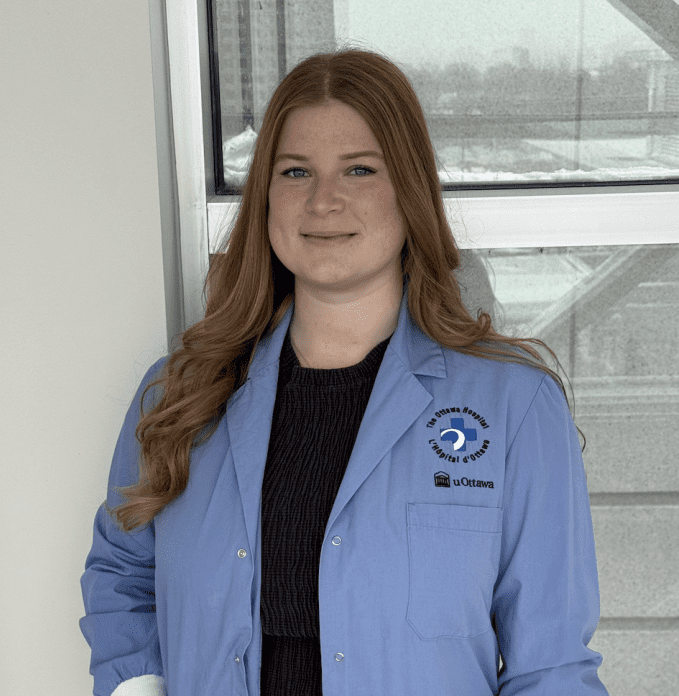
Meet Dr. Emma Sutton, PhD
Emma Sutton, PhD, has been awarded $150,000 for her research project “Before Birth, Beyond Limits: An In-Depth Investigation into Prenatal Therapy for Spinal Muscular Atrophy.”
Dr. Sutton is a postdoctoral researcher with a degree in neuroscience who studies disease mechanisms and potential treatments for SMA using mouse models. Her current work focuses on how the timing and delivery of SMA therapies, particularly during pregnancy, may influence disease development. She first became involved in SMA research while working on her PhD in a research environment that examined SMA as a multi-system disease and emphasized translational approaches to therapy.
This Cure SMA-funded research project addresses an important area of ongoing investigation in SMA treatment. While disease-modifying therapies (DMTs) have led to meaningful improvements in long-term health outcomes, researchers are exploring if starting treatment before birth can provide additional benefits. Specifically, Dr. Sutton’s project investigates whether treatment delivered during pregnancy can safely increase SMN protein levels in the developing fetus and support improved early developmental outcomes. To address this question, her research focuses on the maternal transfer of risdiplam (Evrysdi), given during pregnancy. The study will evaluate whether risdiplam can cross the placenta, reach the developing fetus, and improve key aspects of early health measures such as motor neuron survival and muscle function. This project will also carefully evaluate the safety and tolerability of this approach for both the pregnant mother and her offspring, including how the drug is processed in the body and any potential effects on early development.
In addition to studying prenatal treatment alone, Dr. Sutton will examine whether combining prenatal risdiplam exposure with continued postnatal therapy provides greater benefit than either approach on its own. She will evaluate prenatal risdiplam followed by postnatal treatment with approved SMA therapies, including onasemnogene abeparvovec-xioi (Zolgensma) and nusinersen (Spinraza). By assessing both safety and long-term outcomes, this work aims to clarify the potential benefits and limitations of a combined prenatal-postnatal treatment strategy.
Through this work, Dr. Sutton will expand our understanding of how early SMN-targeting therapies influence disease development, help determine whether treatment before birth is safe and effective, and guide future strategies for treating SMA as early as possible.
maternal transfer: the passage of a treatment or substance from a pregnant mother to her developing fetus during pregnancy, typically through the placenta.
mouse models: a laboratory mouse that has been genetically altered to mimic key aspects of a human disease, allow researchers to study the condition and test treatments.
nusinersen (Spinraza): a therapy that helps the body make more SMN protein by improving how the SMN2 gene is used to produce functional protein.
onasemnogene abeparvovec-xioi (Zolgensma): a gene therapy that delivers a working copy of the SMN1 gene to help the body produce the SMN protein needed for motor neuron health.
risdiplam (Evrysdi): an oral medication that increases levels of the SMN protein throughout the body by helping the SMN2 gene produce more functional protein.
translational approaches: research strategies that aim to turn findings from laboratory or animal studies into treatments or care approaches that can benefit patients.
Cure SMA’s top basic research priorities for 2026 include:
- Enhancing understanding of the molecular, cellular, and biochemical mechanisms that underlie SMA pathology.
- Generating key reagents and tools to facilitate drug development and clinical trials.
- Identifying new therapeutic strategies for treating SMA.
- Identifying drug targets that work synergistically with SMN-upregulating therapeutics to benefit older and symptomatic patients.
In 2026, Cure SMA awarded a total of $750,000 to six scientists to pursue these research objectives!
Thank You!
Special thanks to the Concepcion Family, Nunemaker Family, Weisman Family, Luke 18:1 Foundation, Dhont Foundation, and Cure for Casey Foundation for their generosity to Cure SMA in our quest to invest in basic research that will ultimately drive the next generation of SMA treatments.