





Welcome
Welcome to the first issue of Cure SMA’s quarterly research newsletter, the CUREator! At Cure SMA, we believe that research is the engine that drives ongoing improvement in treatment, clinical care, and quality of life for people with SMA. That is why research is one of Cure SMA’s top priorities.
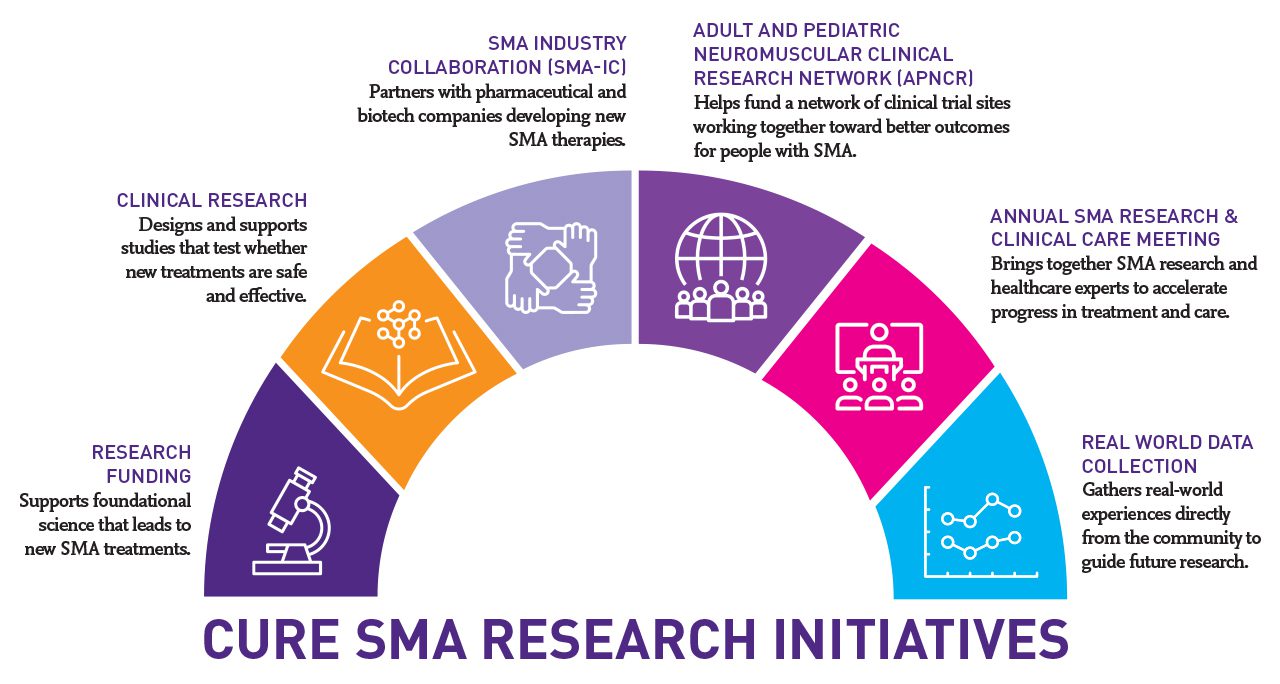
Over the coming year, we will show you how Cure SMA:
- Awards research funding to SMA scientists whose discoveries expand our understanding of SMA, laying the foundation for new treatments.
- Directs clinical research that makes treatments safe and effective for individuals with SMA.
- Partners with stakeholders through the SMA Industry Collaboration (SMA-IC) to bring the SMA community’s preferences into the drug development and delivery process. The SMA-IC is a joint effort between Cure SMA, other nonprofits, and pharmaceutical companies.
- Supports the Adult and Pediatric Neuromuscular Clinical Research Network (APNCR), a team of healthcare providers from clinical trial sites across the United States. Their research promotes access to approved SMA treatments and clinical trials.
- Collects real-world data directly from the SMA community to support drug approvals, inform treatment decisions, and highlight unmet needs among people living with SMA.
- Hosts the Annual SMA Research & Clinical Care Meeting, where SMA scientists and healthcare providers from around the world share their latest research. Their common goal is to achieve the best possible treatment and clinical care for everyone living with SMA.
For CUREator readers who are new to Cure SMA’s research initiatives, we have created the SMA Research Overview and FAQ page. This page is a go-to guide for questions like:
- What are the differences between basic research, translational research, and clinical research?
- How does Cure SMA fund, conduct, and direct research?
- What does Cure SMA do with research results once a study is complete?
- How does research lead to better treatment outcomes and clinical care for people living with SMA?
In future issues, keep an eye out for the chance to ask SMA researchers your questions directly. Until then, we hope you will enjoy this debut issue of the CUREator!
Sincerely,

Jackie Glascock, PhD
Chief Scientific Officer, Cure SMA

Early diagnosis and treatment linked to higher motor milestones
Cure SMA is pleased to announce the publication of “Impact of early intervention on motor milestone achievement in spinal muscular atrophy: Insights from Cure SMA survey data.” The article appears in the April 2026 issue of Neurology and Therapy.
In this study, we analyzed data from children with SMA and 2 or fewer copies of the SMN2 gene. The data came from annual Community Update Surveys. Our aim was to understand which factors were linked to children reaching higher motor milestones. Motor milestones are physical movements and skills that children achieve as they get older. Higher motor milestones include standing and walking alone.
We found that:
- Children who started a disease-modifying therapy (DMT) before 3 weeks of age were more likely to reach higher motor milestones than children who started after 4 months of age. (Figure 1)
- Children with SMA who were identified early through a statewide SMA newborn screening program, and/or through prenatal screening, were more likely to reach higher motor milestones than those diagnosed later in life, after the appearance of SMA-related symptoms.
- Children who received more than one DMT were more likely to reach higher motor milestones than those who received one DMT.
Cure SMA is grateful to all the families who made this study possible by taking part in the annual Community Update Survey. Since 2017, people in the SMA community have shared their experiences and preferences through this survey. Their data help us improve SMA research, clinical care, and advocacy through studies like this one.
This study provides real-world insights into motor function development in children with 2 or fewer SMN2 copies. It highlights the importance of diagnosing and treating them as early as possible to give them the best chances of achieving high-level milestones like walking on their own.
Lisa Belter, co-author of the study
Funding for this research was provided by members of the 2022 SMA Industry Collaboration; members included Cure SMA, Biogen, Genentech/Roche Pharmaceuticals, Scholar Rock, Novartis Gene Therapies, Biohaven Pharmaceuticals, Epirium Bio, and SMA Europe. The SMA-IC currently includes our partners at Novartis, Scholar Rock, Biogen, Genentech/Roche, argenx, NMD Pharma, and SMA Europe.
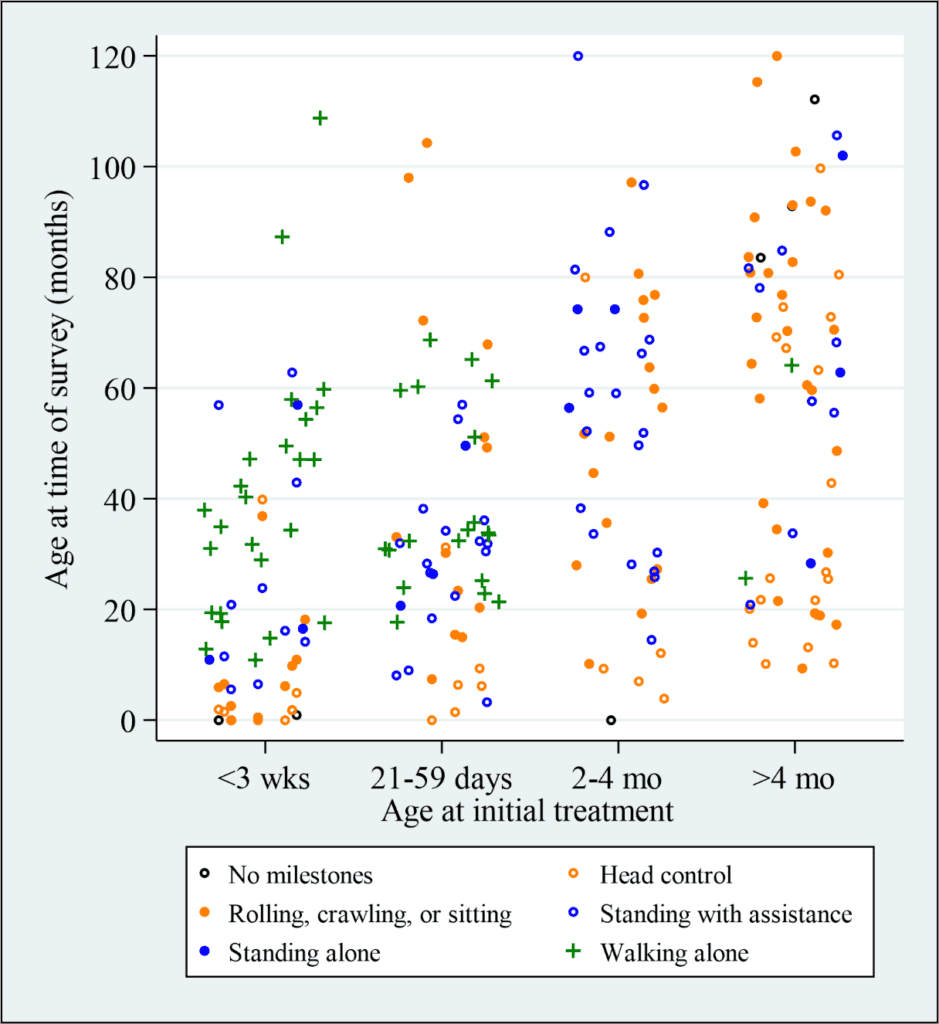
Figure 1. Highest motor milestone reached, by age at initial treatment.
Cure SMA Research
Cure SMA gathers data directly from people with SMA, their families, and their caregivers. We do this by conducting the annual Community Update Survey, as well as other surveys designed to answer specific questions about the SMA community’s experiences, preferences, and unmet needs. We publish findings from these surveys in peer-reviewed journals so they can reach as many researchers and healthcare providers as possible, supporting ongoing improvement in SMA treatment and clinical care.
Below is a summary of our most recently published research:
Cure SMA Research
Planning ahead helps young adults with SMA move to adult care
What was the research about?
Cure SMA asked adults with SMA ages 18–29 about their transition from pediatric to adult healthcare. We also asked them about their experiences with adult healthcare providers.
What were the key results?
People who had better transition experiences were more likely to have received structured preparation from their providers. Those who had negative transition experiences reported more challenges with adult healthcare providers. Among people who reported challenges, nearly all said it was hard to find adult providers with experience in SMA.
Why does this matter?
These results suggest that healthcare providers can improve the move to adult care by helping young adults with SMA plan the transition. They also point to the need for more adult providers with SMA expertise.
“Assessment of transition plan implementation and provider engagement among adults living with spinal muscular atrophy (SMA): Findings from a cross-sectional survey,” by LE Eisenman, AR Wise, and MA Curry.
Each year, Cure SMA awards basic research grants to scientists from around the world. These grants fund research into the biology of SMA, which is the first step in finding new and better ways of treating the disease. Study results are published in peer-reviewed journals so other researchers can build on them as they work toward new and better SMA treatments.
Here is what three recent Cure SMA-funded studies have discovered:
Cure SMA-Funded Research
Study in SMA mice sheds light on why treatment timing matters
What was the research about?
Researchers used a severe SMA mouse model to learn more about why treatment timing is so important in infants with early-onset SMA.
What were the key results?
They found that by the day after birth, mouse pups had already lost some motor neuron axons connecting to certain muscles. An experimental SMN-targeted drug did not reverse this damage once it had occurred.
Why does this matter?
These findings suggest that SMN-targeted therapy may work best when started before axons are lost, and that new treatments are needed to help axons regrow.
“Early loss of axons limits the therapeutic window in a mouse model of spinal muscular atrophy,” by LH Comley, I Partlova, C Nyasa, A Shaikh, and LM Murray.
Cure SMA-Funded Research
Treating pregnant mice with an SMN-targeted drug improves outcomes in pups
What was the research about?
Scientists tested whether giving pregnant mice a drug that boosts survival motor neuron (SMN) protein levels affected pups bred to develop severe SMA-like symptoms.
What were the key results?
They discovered that treating mothers before birth improved the pups’ lifespan, health, and motor function. However, these benefits faded over time without treatment after birth.
Why does this matter?
These results suggest that more research is needed to understand the possible benefits of treating severe SMA both before and after birth.
“Maternal-fetal administration of risdiplam partially rescues the SMNdelta7 mouse model of SMA,” by ER Sutton, A Beauvais, R Yaworski, HJ McMillan, and R Kothary.
Cure SMA-Funded Research
Modifier protein reduces disease severity in SMA mice
What was the research about?
Researchers wanted to understand how a modifier protein reduces disease severity in SMA mice.
What were the key results?
They found that the modifier protein slightly raised survival motor neuron (SMN) protein levels. Interestingly, it also improved nerve-muscle communication through a process that did not depend on SMN.
Why does this matter?
Understanding how modifier proteins affect disease severity in SMA may lead to the development of new treatments with targets other than SMN. Such treatments may be used in combination with SMN-targeted therapies to achieve the best possible outcomes.
“Multiple spinal muscular atrophy disease-modifying effects of a Hspa8G470R synaptic chaperone variant,” by Y-R Her, A Fuentes-Moliz, R Kothary, L Tabares, and U Monani.
New booklet breaks down combination therapy
As more SMA treatments become available, people have questions about whether using more than one could lead to better outcomes. Using two or more treatments for SMA is called “combination therapy.” In combination therapy, treatments may be used at the same time or one after the other. They may work in similar or different ways.
Cure SMA is pleased to share a new booklet that answers common questions about combination therapy, Understanding Combination Therapy: A Plain-Language Guide for People Living with SMA, Families, and Caregivers.
This booklet explains:
- what recent research shows about combination therapy,
- what to know about insurance coverage and access, and
- what questions to ask your SMA healthcare provider.
This information may be useful to individuals and families who want to talk with their healthcare provider about a new FDA-approved SMA drug called ISEMBYLD (apitegromab-mstn).
ISEMBYLD directly targets muscles to improve strength and motor function. It is the first muscle-targeted therapy approved by the FDA for SMA. ISEMBYLD is taken at the same time as an SMN2-targeted therapy (Spinraza or Evrysdi). The FDA has approved ISEMBYLD for individuals with SMA who are 2 years of age and older. It is given through intravenous infusion every 4 weeks.
Researchers are also developing several other drugs for use in combination therapy. You can track their progress using the SMA Drug Pipeline. As treatment options grow, we hope Understanding Combination Therapy helps you make informed decisions with your healthcare providers.
52%
By the numbers
In the Cure SMA community, more than half of people living with SMA are adults.
Cure SMA is committed to understanding their needs, challenges, and experiences. What we learn helps us advocate for the development of treatments for adults with SMA.
From the field
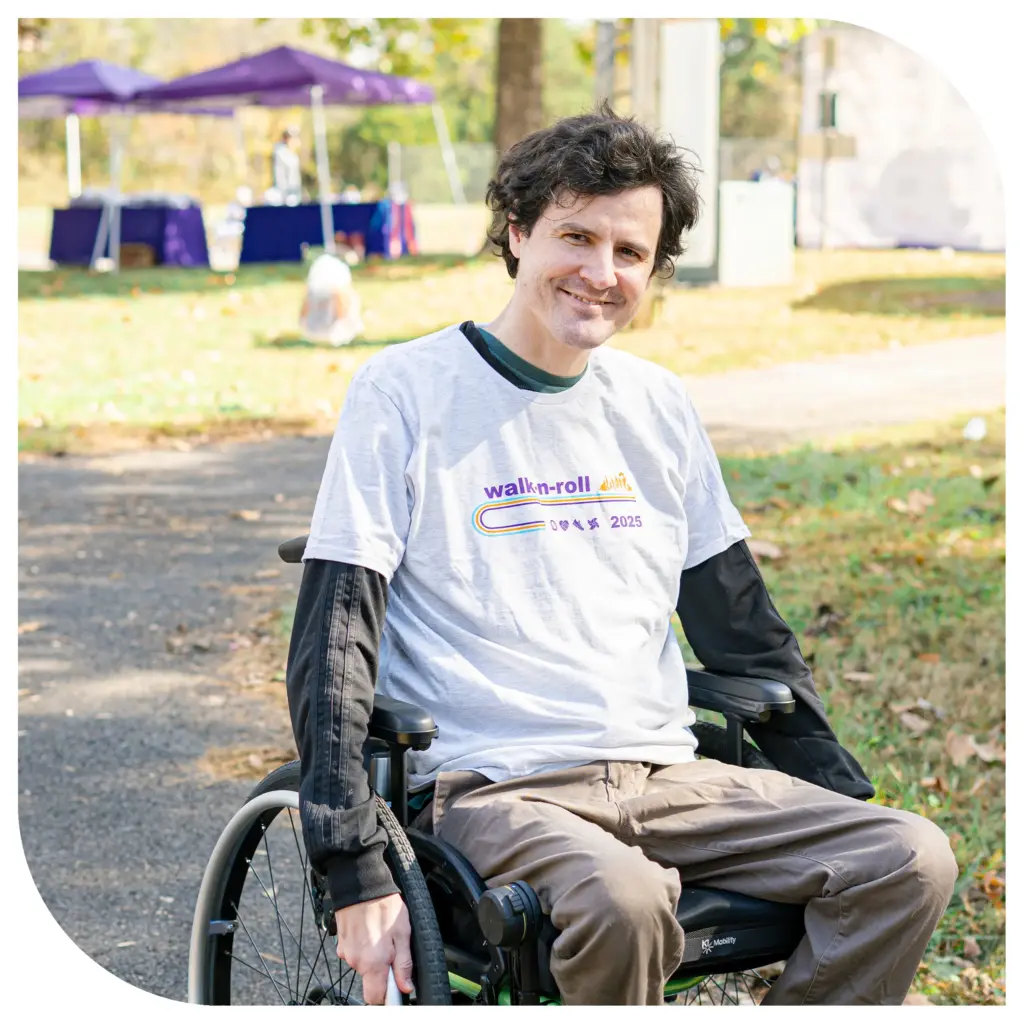
The SMA Industry Collaboration (SMA‑IC) is a partnership that unites Cure SMA, other nonprofit organizations, and pharmaceutical partners to achieve the common goals of improving treatment outcomes and quality of life for individuals with SMA and their families. By sharing data and expertise, SMA‑IC members work together to address scientific, clinical, and regulatory challenges. SMA-IC research turns insights from the community into actionable evidence that can be used to improve the delivery of care, reduce barriers to treatment, and support the development of new therapies that address the everyday needs of individuals living with SMA. A summary of SMA-IC Phase 11 (2026) priorities is available here.
Cure SMA presented these SMA-IC studies at research conferences this fall:
Pediatric Research Award
The abstract titled “Evaluating the evolving SMA phenotype in children: Results from the Cure SMA Community Update Survey” received the Pediatric Research Award at the 2026 American Association of Neuromuscular & Electrodiagnostic Medicine Annual Meeting in Orlando, Florida. The study was presented at the Abstract Award Reception on September 30, 2026.
World Muscle Society
The abstract on the study “Healthcare utilization and associated barriers among adults living with spinal muscular atrophy in the United States” was presented at the 31st Congress of the World Muscle Society, which took place in Hiroshima, Japan, on September 29–October 3, 2026.
Learn more about these studies here.
Funding for this research was provided by the 2025 and 2026 SMA-IC; members include Cure SMA, Novartis, Scholar Rock, Biogen, Genentech/Roche Pharmaceuticals, argenx, NMD Pharma, and SMA Europe.
Quick resources
Understanding Muscle-Targeted Anti-Myostatin Therapy for Spinal Muscular Atrophy (SMA)
Learn about a new way to treat SMA called “muscle-targeted therapy.” When used alongside disease-modifying therapy, muscle-targeted therapy may increase muscle size and strength.
Understanding Gene Therapy in Spinal Muscular Atrophy (SMA)
Discover how gene therapy is used to raise low levels of SMN protein in people with SMA.
Annual Research & Clinical Care Meeting Summaries
This summer, scientists and clinicians from around the world gathered at the 30th Annual SMA Research & Clinical Care Meeting to share their most recent research findings. Catch up on their latest insights.
Opportunities to Participate in SMA Research Studies
Curious about taking part in an SMA research study to help accelerate treatment development and improve clinical care?