





Each year, Cure SMA invites scientists from around the world to submit funding proposals for basic research projects that address specific unanswered questions in spinal muscular atrophy (SMA) biology. Our Scientific Advisory Board ranks the submitted proposals based on their scientific merit and their alignment with Cure SMA’s research priorities. Funding is then awarded to the highest-ranked projects.
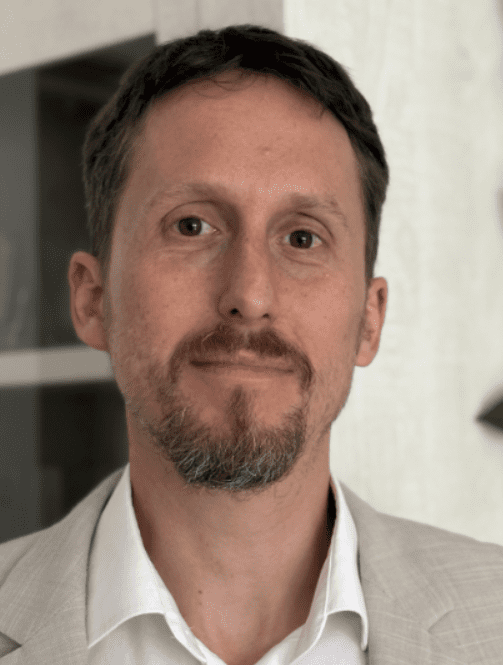
Meet Dr. Christian Simon, PhD
Christian Simon, PhD, has been awarded $150,000 for his research project “Defining Ultrasonic Vocalizations as a Conserved Readout of Cognitive Deficits in Spinal Muscular Atrophy.”
Dr. Simon is a neuroscientist who studies how the brain and spinal cord work together to control movement and behavior. He leads a research group at Leipzig University, where his work focuses on understanding how nerve cells communicate in health and disease. He first became interested in SMA as a student, after learning about it in a biology course. That early exposure led him to focus his thesis on SMA, and it has remained the central focus of his research career.
Dr. Simon’s research focuses on the cerebellum, a region of the brain known to play important roles in motor control, communication, and social behavior. In mouse models of severe SMA, his team has identified cerebellar abnormalities linked to disruptions in ultrasonic vocalizations, which are a behavioral measure commonly used to study early social and communication behaviors in mice. These findings suggest that impaired cerebellar function may contribute to communication-related challenges in SMA and highlight the need to determine whether these effects are distinct from general motor impairment.
This Cure SMA-funded research project builds on growing evidence that SMA may impact additional regions of the nervous system, beyond motor neurons. Dr. Simon’s project is designed to investigate how non-motor manifestations of SMA relate to early communication impairment by establishing whether ultrasonic vocalizations provide a robust and reproducible way to study social and cognitive behaviors in SMA. To do this, he will examine communication changes across different severe SMA models, disentangling communication-specific effects from global motor weakness, and testing whether current SMN-targeted therapies can restore them. Importantly, this research seeks to determine whether these communication-related changes occur independently of muscle weakness and whether current SMN-replacement therapies can improve brain-related symptoms in addition to motor function. By addressing these open questions, this work seeks to clarify the role of the cerebellum in non-motor features of SMA and to develop a useful tool for evaluating future treatments.
ultrasonic vocalizations: high-frequency sounds made by mice and other rodents that are too high-pitched for humans to hear that are used for crucial social communication like conveying emotional states and coordinating interactions, especially between young mice and caregivers.
mouse models: a laboratory mouse that has been genetically altered to mimic key aspects of a human disease, allow researchers to study the condition and test treatments.
Cure SMA’s top basic research priorities for 2026 include:
- Enhancing understanding of the molecular, cellular, and biochemical mechanisms that underlie SMA pathology.
- Generating key reagents and tools to facilitate drug development and clinical trials.
- Identifying new therapeutic strategies for treating SMA.
- Identifying drug targets that work synergistically with SMN-upregulating therapeutics to benefit older and symptomatic patients.
In 2026, Cure SMA awarded a total of $750,000 to six scientists to pursue these research objectives!
Thank You!
Special thanks to the Concepcion Family, Nunemaker Family, Weisman Family, Luke 18:1 Foundation, Dhont Foundation, and Cure for Casey Foundation for their generosity to Cure SMA in our quest to invest in basic research that will ultimately drive the next generation of SMA treatments.