





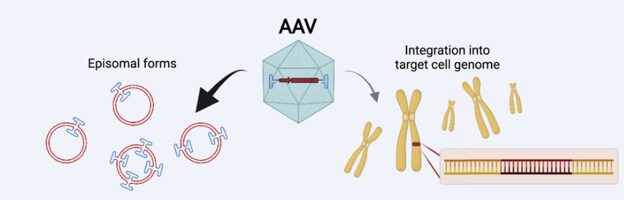
The U.S. Food and Drug Administration (FDA) recently shared new safety information about tumors reported in some children treated with Zolgensma® for SMA. Zolgensma is a gene therapy, a one-time treatment that delivers a working copy of the SMN1 gene into the body's cells. The FDA says the same risk applies to Itvisma®, which uses the same vector, or delivery vehicle, to carry that gene into cells. We know this news may be unsettling, and that it raises new questions for individuals living with SMA, families, and healthcare providers.
If your family chose Zolgensma, you made a thoughtful, caring decision with the best information available at the time. It is understandable to experience mixed feelings.
Cure SMA asked our community to share their questions about this update, and the questions in this FAQ come from those submissions. Many of the questions refer to Zolgensma, but the guidance may also apply to people who have received Itvisma. Cure SMA developed the responses with the support of clinical advisors from our Medical Advisory Council (MAC) and the Adult & Pediatric Neuromuscular Clinical Research Network (APNCR). These answers also draw on public statements from the FDA and Novartis.
This news turns a possible risk into a real one. Doctors are now taking a fresh look at the pros and cons of both monitoring and treatment. Monitoring has its own risks, which we explain below. The right plan will look different for each person, and the same is true for treatment. There is no one right choice for everyone.
This FAQ is a living document. Much is still unknown, and these answers reflect what is known as of November 19, 2026. Cure SMA will continue to reach out to Novartis and the FDA and will update this FAQ as soon as additional information becomes available.
This page does not replace advice from your care team. Please do not stop or change any part of your care plan without first talking with your SMA care team.
With the low numbers of cases that are currently reported, it is very difficult to develop definitive recommendations at this time for individual post-treatment monitoring and future treatment decisions. The answers provided below are in many cases quite general. In a lot of areas we do not have any answers at all yet – and we note as such below where relevant. We will be working to refine guidelines and fill in blanks over time.
General Update:
In general, the estimated risks and benefits of both monitoring and future treatment are being reassessed in light of new information which has taken a theoretic safety risk into an actual one. As shown below there are risks that need to be carefully evaluated with monitoring itself, and the final decision here will be an individual personal one rather than a one size fits all. The risk-benefit analysis and decision for future treatment choice will also vary by individual circumstance, and there will not be one “right” treatment choice for everyone.
Additional Resources
- FDA statement: FDA Investigating Serious Risk of Malignancy Linked to Zolgensma Gene Therapy
- Zolgensma® Prescribing Information
- Itvisma® Prescribing Information
- Cure SMA: An Update for Our Community on Recent Zolgensma Safety Reports
- Video: Understanding Gene Therapy in Spinal Muscular Atrophy (SMA)